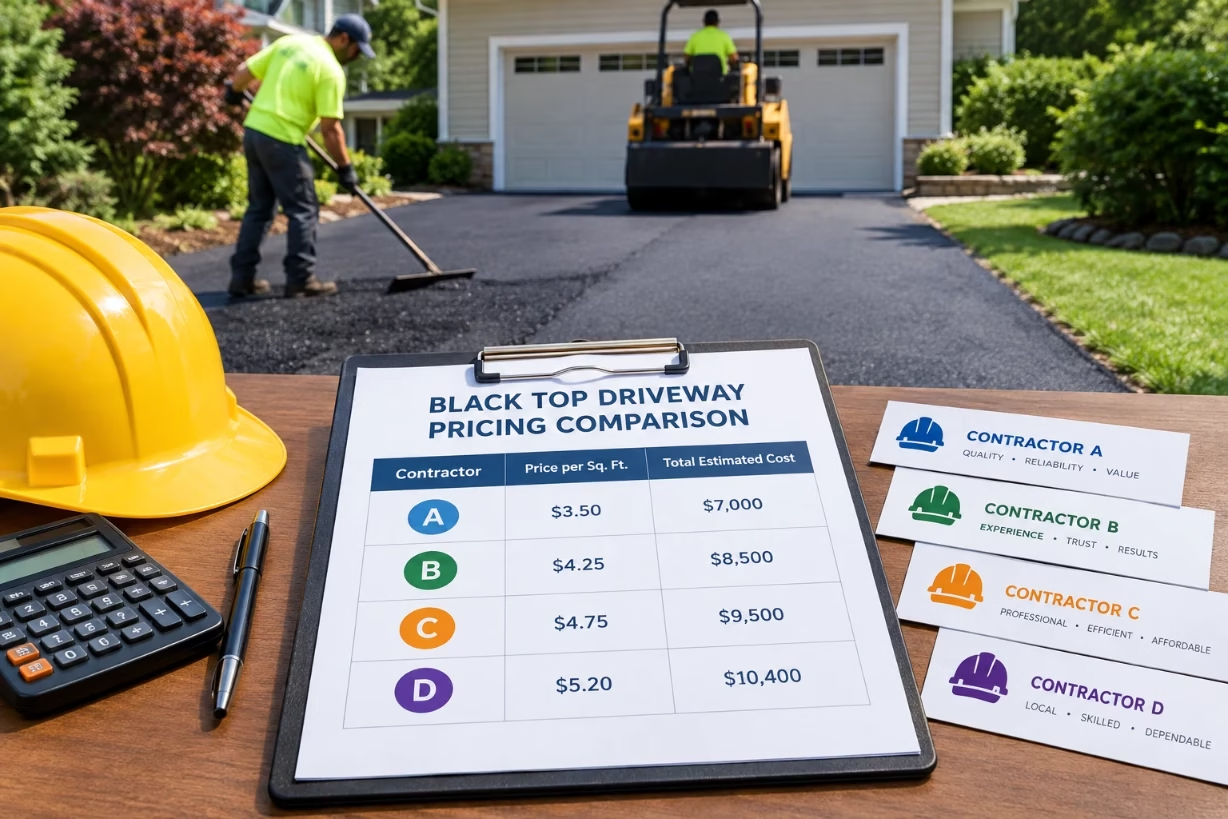
Black top driveway pricing can differ by thousands of dollars between contractors because each bid may include different excavation, base depth, asphalt thickness, drainage work, hauling, and warranty coverage. I recommend comparing the full scope of work, not just the lowest price per square foot.
How Does Black Top Driveway Pricing Compare Across Contractors?
When I compare black top driveway pricing from different contractors, I look past the final number first. Two estimates may both say “new asphalt driveway,” yet one contractor may be planning a thin layer over weak ground while another plans to remove failing material, rebuild the base, correct drainage, and compact every layer. The second quote can look expensive at first glance, but it may be the better deal over the life of the driveway.
For a general starting point, recent national estimates commonly place a new asphalt driveway around $7 to $13 per square foot, replacement work around $8 to $15 per square foot, and overlays around $3 to $7 per square foot. Those are broad planning ranges, not a substitute for local written bids. Material supply, fuel, labor, hauling distance, access, and ground conditions can move black top driveway pricing well above or below a national average.
The goal is not to find the cheapest paving crew. The goal is to find a contractor offering the right driveway for the condition of the property. A smooth, dark surface looks great on day one. What happens underneath it is what decides whether it stays smooth after winter rain, summer heat, parked vehicles, and years of daily use.
Why One Black Top Driveway Quote Can Be Much Higher
Black top driveway pricing is rarely based on asphalt alone. Asphalt is the visible finish, but a dependable driveway is built in layers. The contractor has to consider the soil, slope, existing pavement, water flow, driveway size, equipment access, and how much traffic the surface will carry.
A low quote is not automatically a bad quote, and a high quote is not automatically fair. Still, a major price gap should lead to questions. If Contractor A quotes $6,000 and Contractor B quotes $10,000 for the same driveway, ask both contractors to explain exactly what their prices include. A clear answer tells you far more than a polished sales pitch.
Common reasons contractor prices differ
- Different amounts of demolition and disposal work
- Different base material depth and compaction methods
- Different asphalt thickness after compaction
- Drainage repairs, grading, or slope correction
- Travel time from the asphalt plant or equipment yard
- Minimum crew, paver, roller, and trucking costs
- Permit, edging, apron, and cleanup requirements
- Warranty length and how repairs are handled
Small driveways often carry a higher cost per square foot than large ones. A paving crew still needs trucks, rollers, a paver or other equipment, labor, fuel, and setup time. That means a compact 300-square-foot driveway may not cost half as much as a 600-square-foot driveway. There is a basic job cost before the first ton of hot mix asphalt reaches the property.
Compare Asphalt Driveway Estimates Line by Line
The fairest way to compare black top driveway pricing is to place every estimate side by side and match the work item by item. Do not compare one total with another total until you know what each contractor is actually promising to install.
| Bid Item | What a Clear Estimate Should State | Why It Changes the Price |
|---|---|---|
| Removal | Whether old asphalt, concrete, roots, or base material will be removed | Demolition, loading, hauling, and disposal add real cost |
| Excavation | How deep the contractor will dig below finished grade | Soft soil and deep excavation can require more labor and stone |
| Stone base | Type, compacted depth, and compaction process | A stronger base helps prevent ruts, cracks, and sinking |
| Asphalt layer | Mix type and compacted thickness in inches | Thickness affects material quantity, durability, and cost |
| Drainage | Swales, grading, drains, or runoff control included | Water problems can damage even fresh asphalt |
| Edges and transitions | How the driveway meets the garage, road, sidewalk, or landscape | Finished edges affect appearance and reduce crumbling |
| Warranty | Length, exclusions, repair process, and written terms | A vague warranty may have little real value |
A contractor who simply says, “I will pave it for this price,” has not given enough detail for a useful comparison. I would ask for measurements, material depths, and the work sequence in writing. A detailed estimate protects both the homeowner and the paving contractor because everybody knows what is expected before the equipment arrives.
New Driveway, Replacement, or Overlay: The Biggest Price Difference
The type of project has a huge effect on black top driveway pricing. A surface overlay is usually the least expensive option because it adds new asphalt over an existing driveway. It can make sense when the current pavement is stable, the base is solid, and cracks are limited. But an overlay cannot solve deep base failure, major low spots, alligator cracking, or standing water.
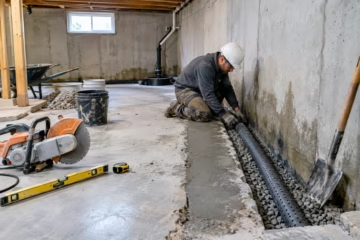
A full replacement costs more because it may include breaking up and hauling away the old surface, repairing weak areas, adding compacted stone, grading the driveway, and laying new asphalt. It is a bigger job, but it is often the right answer when the driveway feels soft, holds water, has deep cracks, or has settled near the garage and street.
New construction can also be costly because the contractor is starting from bare soil. The crew may need to excavate, shape the ground, establish drainage, install a stone base, and build the driveway from the bottom up. This is where a quote that looks high may be justified. The finished black top is only one part of the job.
When an overlay may be worth the lower price
I would consider an overlay only after confirming that the old driveway has a stable foundation. Minor surface cracks, faded color, and light wear do not always require full removal. A contractor should inspect the driveway for movement, loose edges, deep cracking, puddling, and failed patches before suggesting an overlay.
If several contractors recommend replacement while one offers a very cheap overlay, I would not assume the cheaper contractor found a better solution. Ask why the other contractors believe removal is needed. Their answers may reveal issues hidden below the surface.
Base Preparation Matters More Than Most Homeowners Expect
Homeowners naturally focus on the finished asphalt because it is what they can see. I focus heavily on the base because it carries the driveway. Asphalt placed over loose stone, muddy soil, tree roots, or poor drainage can crack even if the top layer looks thick and clean on installation day.
The base should be graded and compacted properly. In many residential projects, a contractor may install several inches of crushed aggregate beneath the asphalt, with the needed depth based on soil conditions, climate, drainage, and vehicle weight. A driveway used by delivery trucks, trailers, RVs, or work vehicles may need a stronger design than a driveway used by two passenger cars.
Ask each contractor this simple question: “What will you do if you find soft spots after removing the old driveway?” A thoughtful contractor will explain whether soft areas are included, priced as an allowance, or billed only after homeowner approval. A contractor who has no answer may be planning to pave over a problem that will return later.
Asphalt Thickness and Material Quality Affect Contractor Pricing
Not every paving estimate includes the same asphalt thickness. One bid may include two inches of compacted asphalt, while another may include three inches. A thicker surface needs more hot mix, more trucking, and more time to place and compact. That difference matters, especially near garage entrances, turning areas, and spots where vehicles regularly stop.
Make sure the quote says whether thickness is measured before or after compaction. Asphalt compacts under the roller, so loose depth and finished depth are not the same thing. If the contractor only lists “two inches of asphalt” without explaining the measurement, ask for clarification before signing.
Material choice can affect black top driveway pricing too. Standard hot mix asphalt is common for residential paving, but contractors may use different mix designs depending on local supply and weather conditions. Recycled asphalt content, aggregate size, and specialty mixes may change the cost. The best choice is not always the most expensive mix. It is the mix and thickness that fit the driveway’s use and local conditions.
Drainage Work Can Make a Cheap Quote Expensive Later
Water is one of the main reasons driveways fail early. If rainwater runs toward the garage, sits in low areas, washes out the edge, or flows beneath the pavement, the base can weaken over time. That is why grading and drainage should be part of any serious black top driveway pricing comparison.
I would walk the driveway after a hard rain before requesting quotes. Take pictures of puddles, washed-out stone, standing water near the garage, and any place where the edge is crumbling. Show those photos to each contractor. This makes it harder for someone to give a quick price without accounting for the real site conditions.
A higher estimate may include reshaping the driveway so water moves away from the house, adding a drain, correcting a low spot, or rebuilding a failed edge. Those items can raise the upfront cost, but skipping them may lead to premature cracking and repairs. A driveway should look neat, but it also needs to shed water in the right direction.
Labor, Equipment, and Local Market Conditions
Contractors do not all have the same operating costs. One company may own its trucks, paver, rollers, and hauling equipment. Another may rent equipment or hire subcontractors. One crew may work close to an asphalt plant, while another must travel a longer distance with hot material. Local wages, fuel prices, landfill fees, and permit rules also affect what contractors charge.
For that reason, I would be careful about comparing your local estimate with a price someone paid in another state three years ago. Black top driveway pricing is local. A price that is reasonable in a rural area with easy access to aggregate can be impossible in a dense city where hauling, labor, permits, and traffic delays cost more.
Instead, get at least three written quotes from established local contractors. Give every contractor the same project details. If possible, ask each one to price the same scope: removal, base depth, asphalt thickness, drainage, edges, and cleanup. That is the closest thing to an apples-to-apples comparison.
How to Spot a Suspiciously Low Asphalt Driveway Bid
A low bid can be tempting, especially when a driveway is already cracked and embarrassing. But a price that is far below every other quote deserves careful review. Some low bids leave out base repairs, drainage, removal, permits, or proper compaction. Others rely on vague language that makes it easy to add charges later.
Be especially cautious if a contractor pressures you to decide immediately, says they have “extra asphalt” from another job, refuses to provide a written scope, asks for most of the money before work starts, or will not show insurance information. A professional contractor should be able to explain the job in plain language and put important terms in writing.
Questions I would ask before choosing a contractor
- What exact work is included in this black top driveway pricing?
- How deep will you excavate and how thick is the base?
- What asphalt thickness will remain after compaction?
- How will you handle soft soil, roots, and unexpected damage?
- Where will water drain after the driveway is finished?
- Who performs the work, and is any work subcontracted?
- What payment schedule and written warranty do you provide?
Choose Value, Not Just the Lowest Driveway Price
The best contractor is usually not the cheapest or the most expensive. I look for a contractor who visits the site, measures carefully, asks about drainage and vehicle use, explains the base and asphalt plan, and provides a detailed written estimate. That level of care usually carries into the work itself.
Before signing, read the contract slowly. Confirm the total price, deposit amount, payment schedule, start window, estimated completion time, material details, warranty, change-order process, and cleanup plan. If an estimate is unclear, ask for the wording to be changed. A trustworthy contractor should not be offended by reasonable questions about a major home expense.
In the end, black top driveway pricing should be judged by what the contractor will build, how clearly the work is defined, and whether the driveway is designed to last on your property. A well-planned bid may cost more upfront, but a stable base, proper drainage, correct asphalt thickness, and responsible installation can save money and stress for years.