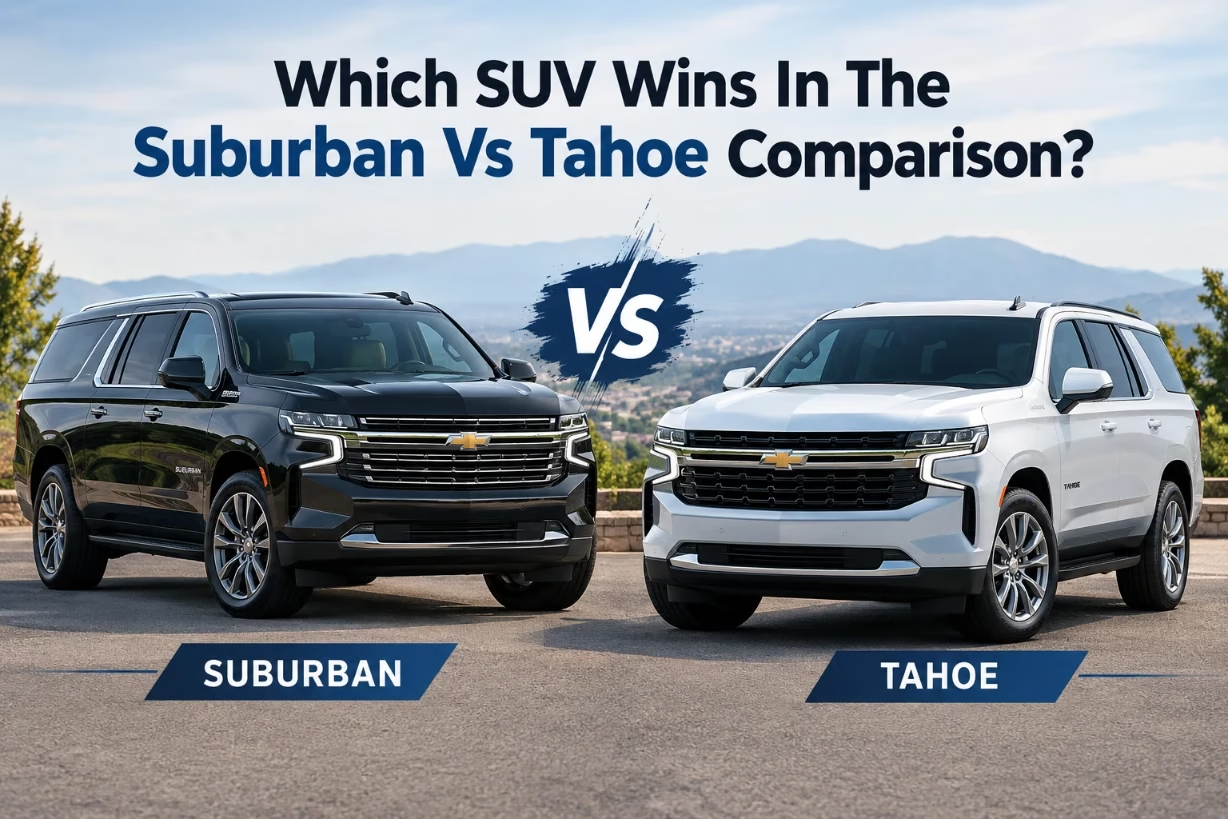
If you want a family hauler with more space and comfort, the Suburban usually wins the suburban vs tahoe matchup. If you care more about parking, price, and daily driving ease, the Tahoe often makes more sense for most suburban and city families.
When people ask me which SUV wins in the suburban vs tahoe comparison, I do not just throw out a quick answer. These two full size SUVs are close siblings, and both are built for family life, road trips, and towing. The real win depends on how you live, how many people you haul, and how often you load the cargo area to the ceiling. In this guide, I will walk you through the details so you can see which one actually fits your daily life, not just the spec sheet.
Suburban vs Tahoe: The Core Differences In Plain Language
Even if you are new to big SUVs, you probably know the suburban vs tahoe conversation usually comes down to one main thing: size. The Suburban is longer. The Tahoe is shorter. But that simple line does not tell the full story of how they feel on the road, in your driveway, and with kids, pets, and luggage piled in.
Both SUVs share the same basic platform, engines, and many features. They usually offer three rows of seats, strong towing numbers, and a quiet ride. Where they split paths is how they balance passenger space, cargo room, parking ease, and cost.
How The Suburban Is Different From The Tahoe
Here is how I like to explain the suburban vs tahoe differences to someone who has never driven either one. The Suburban feels like a long distance train car built for carrying people and stuff in comfort, especially in the third row and behind it. The Tahoe feels more like a large family wagon that still fits in most driveways and parking spots without drama.
The Suburban usually gives you significantly more cargo space behind the third row, more overall room for luggage, sports gear, and strollers, and a little more legroom for third row riders. The Tahoe gives you more agility in city streets and parking garages, a slightly lower starting price, and a driving feel that is easier for people coming from midsize SUVs.
Size, Space, And Comfort: Where Suburban Starts To Pull Ahead
If you are comparing suburban vs tahoe for a big family or frequent road trips, size and space are where your decision likely starts. I have seen many families regret buying the smaller model when they did not fully think through how often they would use the third row with luggage.
Exterior Size: Length, Height, And Everyday Fit
The Suburban is longer than the Tahoe by a clear margin. That extra length mainly stretches behind the rear wheels, which turns into more cargo room behind the third row. On paper the difference in inches may not sound wild, but in real life it can be the difference between closing the hatch easily or doing suitcase Tetris every single weekend.
However, that extra length also means the Suburban can feel bulky in tight store parking lots, older city streets, and narrow garages. The Tahoe, while still a big SUV, feels more manageable for daily errands, quick coffee runs, and school drop offs. When you think suburban vs tahoe, ask yourself how often you deal with tight parking or street parking in crowded areas.
Passenger Space And Third Row Comfort
Both the Suburban and Tahoe offer three rows, and in most trims you can choose bench or captain’s chairs in the second row. In basic use, both feel roomy, especially in the first two rows. The question is how often you will use that third row for adults or taller teens.
The Suburban usually offers more legroom and headroom in the third row, which can make long drives less tiring for full size passengers. If you regularly put grandparents, older teens, or adult friends in the third row, the Suburban has a real edge. In the suburban vs tahoe debate, this is one of the most practical advantages for the Suburban.
The Tahoe’s third row is better suited for kids and shorter trips for adults, especially when the second row is slid back. It is still usable, but on really long drives, grown ups may feel more cramped compared to the Suburban. If your third row is “sometimes use” instead of “always full,” the Tahoe can still work fine.
Cargo Room: The Make Or Break Factor For Many Families
Cargo space is where the suburban vs tahoe comparison stops being close. The Suburban usually leads by a large amount, especially behind the third row. That means if you want to carry seven or eight people and still have real room for suitcases, groceries, folding strollers, sports bags, and a cooler, the Suburban starts to look very attractive.
With the Tahoe, when all three rows are up, the cargo area behind the third row is more limited. You can still fit groceries, a couple of carry on bags, and soft duffel bags, but a big stroller or several large suitcases can be a tight squeeze. Many Tahoe owners end up dropping the third row part of the time to get the space they want.
So if your life often looks like “full family plus luggage and gear,” the Suburban is usually the easier choice. If most of the time you drive with only one or two rows full and only sometimes carry big loads, the Tahoe may still be enough while saving you size and cost.
Driving Experience: How Suburban vs Tahoe Feel On The Road
A big part of choosing between suburban vs tahoe is how confident and relaxed you feel behind the wheel. On paper they share engines, transmission choices, and similar suspension setups. On the road, the difference in size and weight changes the feeling more than you might expect.
Ride Comfort And Handling
Both SUVs aim to deliver a smooth, quiet ride that does not beat you up on long trips. With proper tires and suspension options, both Suburban and Tahoe can float over broken pavement and highway expansion joints in a way smaller crossovers simply cannot match.
The Suburban tends to feel more “planted” on the highway because of its longer wheelbase. Once you are cruising at speed, it tracks straight and calm, which helps reduce driver fatigue on long interstate stretches. The tradeoff is that in tight turns and quick maneuvers around parking lots, you feel the extra length. It is not nimble.
The Tahoe feels a bit lighter on its feet. Turning into small streets or pulling into parking spots usually feels less stressful. If you are switching from a midsize SUV or even a minivan, the Tahoe’s size feels like less of a jump. Many people find it easier to live with day to day, especially in suburbs with busy shopping centers and tight drive throughs.
Power, Engines, And Towing Confidence
In most model years, suburban vs tahoe engine options line up very closely. You will often see similar V8 engines, sometimes a fuel saving option like a smaller turbo or diesel in certain years, and comparable transmissions. Power output and towing ratings are usually very similar, with minor differences based on exact configuration.
Both SUVs can tow campers, boats, and utility trailers with confidence when properly equipped. If towing is a big part of your life, you should focus more on specific tow packages, cooling systems, gear ratios, and brake controllers rather than the nameplate alone. In general, though, both Suburban and Tahoe are up for serious towing duty.
When you are not towing, both offer strong passing power on the highway and smooth acceleration around town. You will not confuse them with sports cars, but neither one feels weak unless you are loaded to the roof and climbing steep grades. For most buyers, towing and power are a tie in the suburban vs tahoe comparison.
Fuel Economy And Running Costs
Big body on frame SUVs are never fuel sipping champions, and that is true for both suburban vs tahoe. That said, there are some small differences worth thinking about if you drive long distances every week.
Fuel Use In Everyday Life
Because the Suburban is longer and often slightly heavier, it can use a bit more fuel than a similar Tahoe in real life driving. The official ratings may be close, but weight, cargo load, and how often you fill every seat can tilt things. Over years of ownership, a few miles per gallon difference can turn into a lot of fuel money.
The Tahoe usually lands just a bit better on fuel economy, especially in city driving where starting and stopping a heavier vehicle adds up. If you do long highway trips at steady speeds, the gap may shrink, but city and mixed driving often favors the Tahoe.
If fuel cost is a major factor, you may want to look at specific engine options, cylinder deactivation features, and any available efficiency packages. But as a simple rule: in suburban vs tahoe, the Tahoe usually has the slight edge for fuel use.
Interior Features, Tech, And Comfort Options
Since Suburban and Tahoe frequently share platforms and trim levels, the cabin experience can feel very similar. The difference comes from how much space you have to enjoy those features.
Cabin Layout And Seat Choices
In both Suburban and Tahoe, you can usually choose second row bench seats for maximum people capacity or captain’s chairs for easier access to the third row and more comfort for middle row passengers. That choice does not change much between suburban vs tahoe; it is more about your family layout.
Where the Suburban stands out is how open the cabin feels, especially behind the second row. With the extra length, you get a more airy feeling when all rows are up, and when you fold rows down, the flat cargo area starts to feel almost like a small van.
The Tahoe’s cabin is still roomy but has a bit more of a traditional large SUV feel. If you have ever sat in a big three row crossover, the Tahoe will feel familiar, just tougher and more truck like underneath.
Tech, Infotainment, And Safety Features
In most model years, tech and safety options track closely between Suburban and Tahoe. Touchscreen size, smartphone integration, premium audio formats, and driver assist features like lane keeping, automatic braking, and adaptive cruise usually mirror one another. This is where suburban vs tahoe is almost a pure tie.
What matters more is which trim level you pick and which packages you add. Both SUVs can be specced as simple family haulers with just the basics or as full luxury machines with leather, surround view cameras, head up displays, and advanced driver assist bundles. If tech is your main focus, you will decide more by budget and options than by Suburban vs Tahoe branding.
Price, Value, And Ownership Costs
Now let’s talk money, because in suburban vs tahoe this is often the deciding factor. A lot of buyers love the idea of a Suburban until they look at the price when similarly equipped.
Purchase Price And Trim Levels
The Tahoe usually starts at a lower base price than the Suburban. Even when you match engines and many features, the longer Suburban tends to cost more. That difference may be small in entry trims and grow in higher trims with more features.
If you are trying to stay within a certain monthly payment, the Tahoe often gives you more wiggle room to add driver assists or comfort features without blowing your budget. For buyers who do not absolutely need the Suburban’s extra cargo room, the Tahoe can feel like better value.
On the flip side, if you truly need the Suburban’s space, you may find that going cheaper and smaller first only leads to an earlier trade in. Then the total cost over a few years can end up higher than just buying the bigger vehicle once.
Resale Value And Long Term Costs
Both Suburban and Tahoe usually hold value well, especially in markets where large SUVs and towing ability are always in demand. The exact resale numbers depend on year, mileage, care, and local conditions, but in general neither model is a poor choice for resale.
The Suburban’s extra size can keep it attractive for large families, shuttle use, and commercial fleets. The Tahoe’s more manageable footprint can keep it appealing for buyers who want a big SUV but do not have huge parking spaces. In the long run, suburban vs tahoe are often similar on depreciation curves.
Insurance and maintenance costs are also close, since they share so many components. The main variable will be how you drive, how much you tow, and whether you keep up with regular service. There is no major cost advantage to either model in these areas.
Who Should Choose The Suburban?
When I walk people through suburban vs tahoe decisions, I usually see a clear “Suburban type” of owner emerge. This driver often has a big household or extended family living close by and regularly uses all three rows with real luggage in the back.
You are likely a good match for the Suburban if:
- You have three or more kids and often bring friends or relatives along.
- You take regular road trips where every seat and the cargo area are full.
- You use strollers, sports gear, camping setups, or musical instruments all the time.
- You have a driveway or garage that easily fits a long vehicle.
- You are comfortable driving a big SUV and do not fear tight parking.
For this type of owner, the Suburban’s extra length turns into daily convenience, not just a bigger number on a spec sheet. In this lifestyle, suburban vs tahoe often ends with the Suburban as the clear winner.
Who Should Choose The Tahoe?
On the other side, many buyers want three rows and towing but do not live in a world of constant max capacity use. They spend more time in crowded store lots than on open highways with a trailer behind them.
You might be better served by the Tahoe if:
- You usually carry four to six people, and the third row is for occasional use.
- You live in suburbs or cities with tight parking, small garages, or older streets.
- You want a big SUV feel without going to the biggest option.
- You care about fuel use and want every small advantage you can get.
- You want to keep the purchase price lower while still getting strong features.
For this kind of owner, the Tahoe often hits the sweet spot. In the suburban vs tahoe question, the Tahoe brings almost all the capability with fewer daily headaches and a gentler hit to the budget.
Daily Life Scenarios To Help You Decide
To make the suburban vs tahoe choice more real, I like to walk through a few common scenarios. Picture your own life inside these situations and notice which SUV solves more problems without creating new ones.
Scenario 1: Big Family, Busy Weekends
You have three kids in different sports, a large dog, and frequent weekend trips to games, practices, and family gatherings. You often have at least six people in the vehicle and loads of gear. In this case, the Suburban’s massive cargo space and third row comfort are worth the extra length. You will use the room every week.
Scenario 2: Smaller Family, City Suburb Living
You have two kids, maybe an occasional visiting grandparent, and you live in a tight suburb near a major city. Parking is competitive, garages are short, and you often squeeze into narrow lots. Here, the Tahoe’s shorter length and easier maneuvering reduce daily stress, while still giving you three rows when you need them.
Scenario 3: Frequent Road Trip Couple Or Empty Nesters
You no longer carry kids daily, but you road trip often with luggage, maybe bikes or kayaks, and sometimes friends. You want comfort and towing ability, but you do not often fill the third row with people. In this case, suburban vs tahoe can go either way. If you prefer agility and better parking, go Tahoe. If you load heavy, large items often, the Suburban might still make sense.
Final Verdict: Which SUV Really Wins Suburban vs Tahoe?
When I bring together all the points, I see the suburban vs tahoe matchup as less of a “one winner for everyone” and more of a “clear winner for your specific lifestyle.” The Suburban wins if you truly need maximum people space and cargo room at the same time. The Tahoe wins if you need a practical, powerful, three row SUV that still fits easily into normal life.
If I had to put it in one sentence: For big families who travel heavy, the Suburban usually wins suburban vs tahoe. For most suburban drivers who want space without the extra size and cost, the Tahoe is the smarter pick. Either way, when you choose based on how you live rather than just specs, you end up happier every time you start the engine.