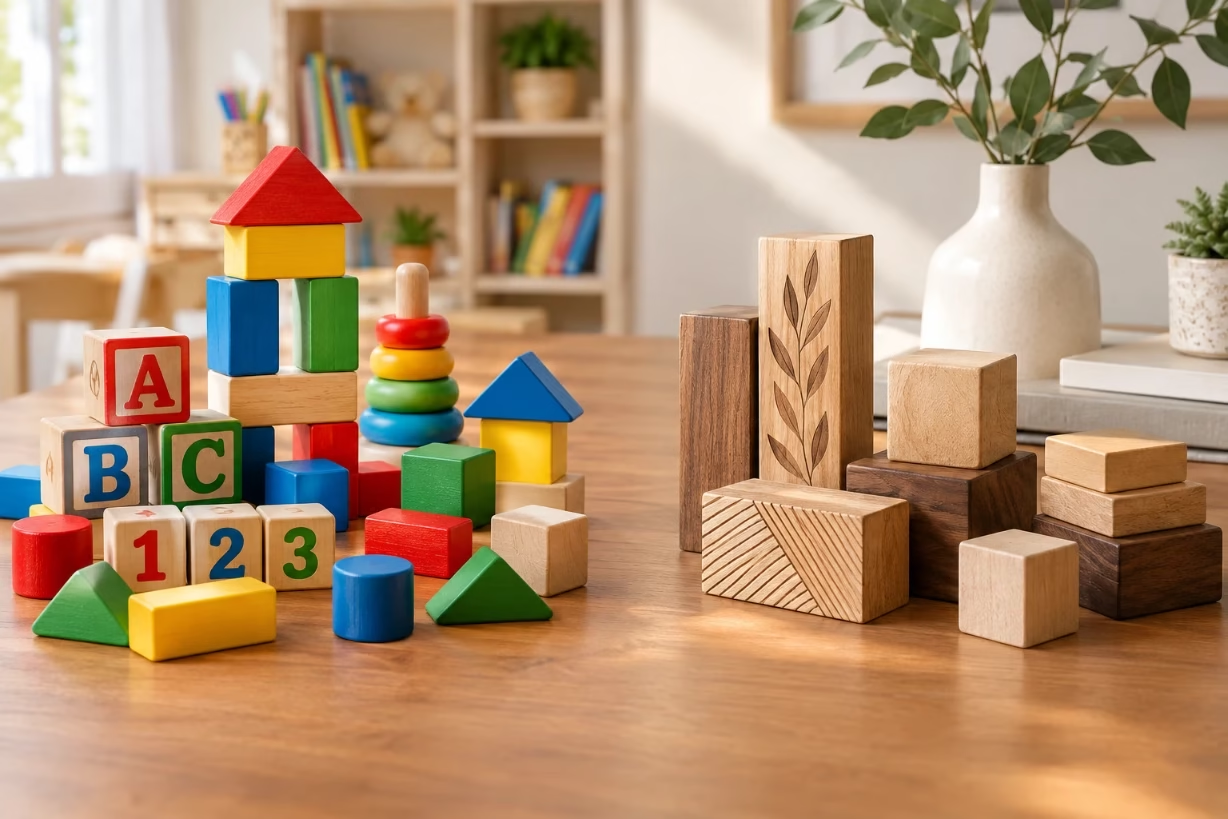
The main differences between educational wooden blocks and decorative wooden blocks come down to purpose, safety standards, durability, and design. Educational blocks are made for play, learning, and child development. Decorative wooden blocks are made to look nice on a shelf, not to be handled every day by kids.
What People Really Mean By Educational Vs Decorative Wooden Blocks
When parents or teachers ask about the differences between educational wooden blocks and decorative wooden blocks, they are usually trying to solve a simple problem. They want to know which blocks are safe for kids to play with, which ones actually help children learn, and which ones are only meant to sit on a nursery shelf and look pretty. I will walk through each of those points in clear, simple language so you can choose with confidence.
Core Purpose: Learning Tool Or Home Decor?
The biggest of all differences between educational wooden blocks and decorative wooden blocks is the main job each type of block is built to do.
Educational wooden blocks are made to be used again and again. A child might stack them, knock them down, sort them by color, count them, or use them to tell stories. Every scratch and dent is part of that learning process. The design decisions focus on safety, open-ended play, and real hands-on use.
Decorative wooden blocks are made to be seen, not seriously handled. They might spell a baby’s name on a shelf, mark a milestone in photos, or fit into a certain home decor style. They often look beautiful in pictures, but they are not always safe or sturdy for daily play, chewing, or rough toddler hands.
Design And Features Of Educational Wooden Blocks
To understand the differences between educational wooden blocks and decorative wooden blocks, it helps to look closely at the design of true learning blocks.
Shape Variety And Open-Ended Play
Good educational wooden blocks usually come in a mix of shapes. You will often see cubes, rectangles, cylinders, arches, triangles, bridges, and maybe some specialty pieces like windows or doors. This variety is not random. Different shapes encourage children to problem-solve when building.
For example, a child learns that a tall tower is steadier with a wide rectangle at the bottom instead of a thin cylinder. That simple discovery is early physics and engineering. Decorative blocks, in contrast, are often simple cubes or flat plaques because the maker expects them to be stacked once and then left alone.
Colors, Letters, Numbers, And Symbols
Many educational wooden blocks use bright, high-contrast colors, letters, numbers, or even pictures of objects. These details are chosen to support language skills, number sense, and visual tracking. A child might line up all the red pieces, search for the letter that starts their name, or count the dots printed on a side.
Decorative blocks might have letters or numbers too, but they are usually there for looks. The font might be thin or hard to read. The colors might match a trendy nursery palette more than a child’s learning needs. This is another of those subtle differences between educational wooden blocks and decorative wooden blocks that you can spot once you start paying attention.
Texture And Finish
Educational wooden blocks usually have a smooth, sanded surface with rounded edges. The finish is often a child-safe oil, beeswax, or certified varnish. The goal is a texture that feels pleasant in the hand and does not splinter, even after years of use.
Decorative blocks might be rougher on unseen edges, heavily painted, or sealed with a finish not meant for mouth contact. They might have sharp corners if the maker assumed they would never be handled by a toddler. When you run your fingers along the edges, you can usually feel the difference right away.
Safety Standards And Materials
Safety is where the differences between educational wooden blocks and decorative wooden blocks become truly serious, especially for babies and toddlers who put everything in their mouths.
Child-Safe Paints And Finishes
Blocks made for play must follow strict toy safety rules in many countries. That usually means non-toxic, lead-free paints and finishes that do not chip easily. Many brands also test for heavy metals and other harmful chemicals. If a baby decides to gnaw on a blue corner for ten minutes, the block should still be safe.
Decorative blocks do not always follow those toy standards. The paint might be meant for furniture or crafts, not for items used like teethers. Glitter, metallic paint, or rough varnish might look cute on a shelf but can be a bad choice for everyday handling. When you are weighing the differences between educational wooden blocks and decorative wooden blocks, always check for labels like “toy-safe,” “EN71 tested,” or similar safety notes if the child is very young.
Wood Type And Quality
Educational blocks are often made from durable hardwoods like beech, maple, or rubberwood. These woods are dense, less likely to splinter, and better at holding their shape. They stand up to years of drops, throws, and chewing.
Decorative blocks might be made from softer woods or even composite wood products. That is fine for sitting still on a shelf, but not great for rough play. Softer woods dent and splinter more easily. Over time, this can create small sharp areas, which are not ideal for little hands.
Choking Hazards And Size
For babies and toddlers, size matters a lot. Educational wooden blocks for younger children are usually large enough that they cannot be easily swallowed. Makers test their blocks with a small-parts cylinder to be sure.
Decorative sets might include small pieces, thin tiles, or add-on parts like tiny wooden hearts or stars. These look charming in a photo shoot but may not be safe on the floor with a crawling baby. If you buy decorative blocks for display in a nursery, store them out of reach or wait until the child is older.
Durability And Everyday Use
Another key part of the differences between educational wooden blocks and decorative wooden blocks is how they handle wear and tear over time.
Built For Rough Handling
Educational blocks are designed to be dropped, knocked down, rolled across the floor, and stuffed into toy baskets. A good set should survive years in a preschool classroom. The corners will round out more. The paint might fade a bit. But the blocks should still be safe and usable.
Decorative blocks may chip, crack, or lose pieces of paint if handled roughly. Tiny decorative add-ons, such as glued-on wooden shapes or metal details, can fall off. If you see fragile add-ons, that is a clear signal the blocks are meant for display, not serious play.
Washability And Care
Parents also need to think about how easy it is to clean the blocks. Educational sets normally handle a quick wipe with a damp cloth and mild soap. Some finishes can even be gently sanitized without damage.
Decorative blocks with paper overlays, stickers, or delicate paint may not handle water at all. The design can peel or fade. Since kids touch everything with sticky fingers, this matters more than it might seem at first.
Educational Value: What Children Actually Learn
The heart of the differences between educational wooden blocks and decorative wooden blocks lies in their learning impact. What does a child gain from each one?
Cognitive Skills And Problem Solving
Educational wooden blocks support spatial reasoning, early math skills, and logic. As kids build, they test balance and weight, measure height, compare shapes, and see patterns. A child might learn that two short blocks equal the length of one long block. That simple act links directly to concepts like addition and measurement later in school.
Decorative blocks usually do not offer that same level of engagement. A child may stack them a few times, but if there are only a few shapes or if the blocks are fragile, the play will be limited. They can still be used in pretend play, but they are not optimized for deep building exploration.
Language And Literacy
Lettered educational blocks let kids see and touch the alphabet. They might build their name, spell simple words, or match upper and lower case. Parents and teachers can use the blocks to play simple sound games, like finding all the blocks with the “B” sound.
Decorative name blocks can also support language, but only in a narrow way. If a shelf only shows the letters in a child’s name, that child will not get the same broad exposure to all letters and sounds. This does not mean decorative sets are useless. It just means their learning value is more limited than a full educational set.
Fine Motor Skills And Hand Strength
Picking up blocks, turning them in the hand, and stacking them carefully builds finger strength and control. Educational blocks are sized and weighted to give little muscles a real workout.
Some decorative blocks are too light, too heavy, or too slippery, changing how they feel in the hand. If the finish is glossy and slick, towers fall easily, which can frustrate young kids. The difference in weight and grip might sound small on paper, but it shows up clearly in real play.
Emotional And Social Benefits Of Play Blocks
Not all differences between educational wooden blocks and decorative wooden blocks are about science or safety. There is an emotional side too.
Confidence And Creativity
When a child builds a stable tower or creates a “city” from blocks, they feel proud. Educational blocks, with their sturdy design and open-ended nature, make these little wins more likely. Children learn to try again after a tower falls, which builds resilience.
Decorative blocks might not give the same level of creative freedom if they are delicate or limited in number. They can still be part of make-believe games, but they rarely support large, complex projects that stretch imagination and patience.
Cooperative Play
In homes, preschools, or playgroups, a big bin of educational wooden blocks invites group play. Kids share ideas, negotiate, and build together. They might divide roles as “builder,” “demolition expert,” or “planner.” This social side is a big part of why teachers love block play.
A small set of decorative blocks, sitting on a shelf, does not naturally invite the same kind of shared project. It is more of a visual touch than a social tool.
How To Tell Which Kind Of Blocks You Are Buying
Sometimes packaging is not clear. A product might show a child in the photos, but the description reads more like decor. Here is how I look at the differences between educational wooden blocks and decorative wooden blocks in real shopping situations.
Questions To Ask Yourself
Before you buy, pause and ask:
- Does the listing mention toy safety standards or child-safe finishes?
- Are there multiple shapes, sizes, and enough pieces for real building?
- Do the edges look smooth and rounded in close-up photos?
- Is the product placed in the “toys” category or “home decor” section?
- Does the maker call these a “photo prop,” “shelf decor,” or a “learning toy”?
The more boxes you can check in favor of safety, variety, and durability, the more likely you are looking at a truly educational set.
Reading Reviews With A Critical Eye
Reviews also reveal hidden differences between educational wooden blocks and decorative wooden blocks. If many reviews talk about “looks beautiful in the nursery,” “perfect for monthly baby photos,” or “matches my farmhouse decor,” you are probably dealing with decor-focused blocks.
If reviewers say things like “used daily in our preschool,” “survived rough toddler play,” or “great for learning colors and shapes,” that is a strong sign of educational intent and durability.
When Decorative Wooden Blocks Still Make Sense
After all this talk about differences between educational wooden blocks and decorative wooden blocks, it might sound like decorative sets are always a bad choice. They are not. They simply serve a different purpose.
Decorative blocks can be lovely keepsakes. They can mark a baby’s birth details, show a favorite quote, or spell out a family name. For older kids who no longer chew on toys, decorative sets can safely join pretend play as “signs,” “storefronts,” or “props” in their block worlds.
The key is to treat decorative blocks like any other decor item. Keep them out of reach of babies, read all safety notes, and use them in ways that match their design.
How To Combine Educational And Decorative Blocks At Home
You do not have to choose only one type. Many families use both and enjoy the best of each, once they understand the differences between educational wooden blocks and decorative wooden blocks.
One simple method is to keep a large basket of educational wooden blocks on the floor, where kids can reach them easily. Then place decorative blocks higher up, on a dresser or floating shelf. During supervised play, you can bring down a few decorative pieces if they are safe enough, but the main building work still happens with the sturdier, play-rated set.
Another idea is to create a rotating play shelf. Mix safe educational blocks with a few special display pieces that change across seasons or holidays. This keeps the space visually interesting for adults while still keeping kids’ primary tools safe and functional.
Final Thoughts: Choosing What Fits Your Family Or Classroom
When you look closely, the differences between educational wooden blocks and decorative wooden blocks touch almost every part of design and use. Educational sets focus on safety, open-ended play, learning value, and real durability. Decorative sets focus on visual style, theme, and how well they match the room.
If your main goal is to support a child’s development, go with well-made educational wooden blocks that clearly state their safety standards and are built for years of play. If you simply want a beautiful touch on a shelf or a sweet photo prop, decorative wooden blocks can absolutely have a place in your home, as long as you use them with care.
Once you understand the real differences between educational wooden blocks and decorative wooden blocks, it becomes much easier to shop wisely, balance style with safety, and give children the kind of hands-on play that truly helps them grow.