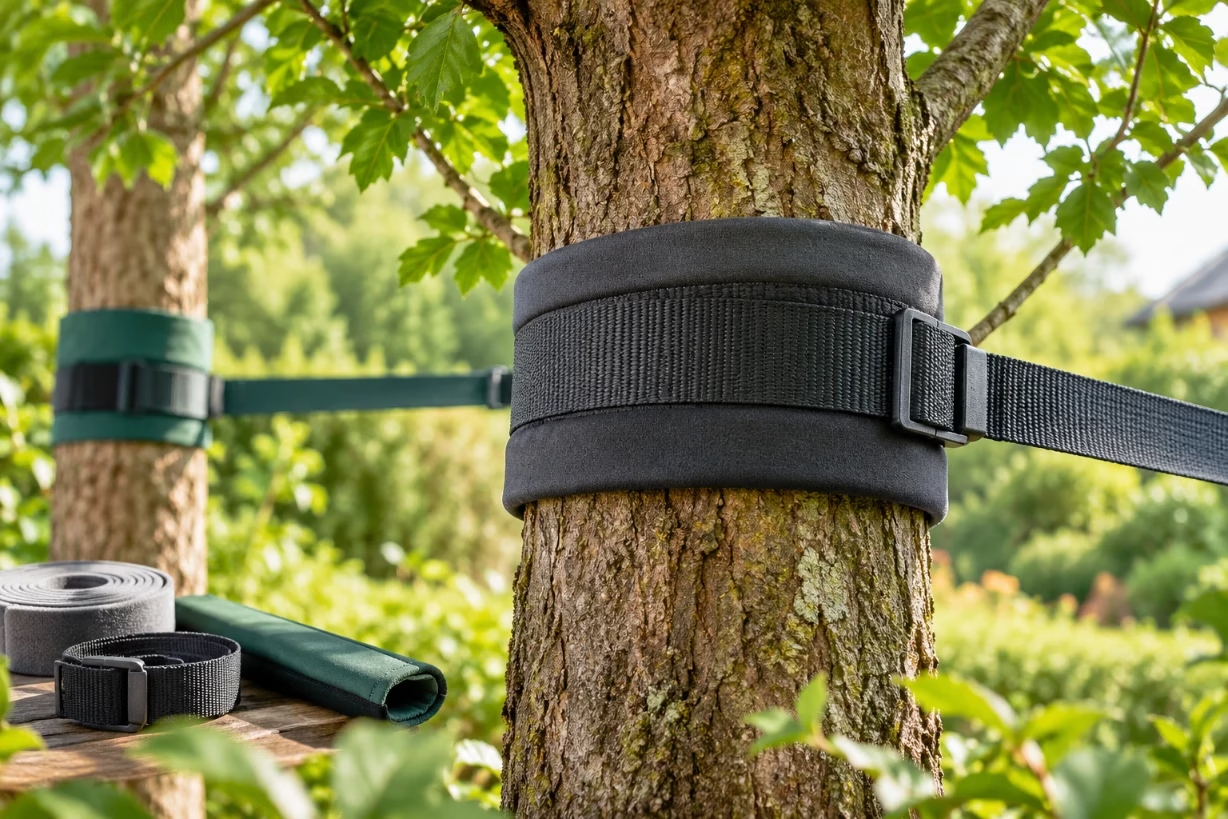
The best fasteners that won’t harm the tree are usually not driven into the tree at all. Choose wide, soft, adjustable ties attached to separate stakes or supports, and check them often. For signs, lights, swings, or décor, freestanding hardware is safer than nails, screws, wire, rope, or tight straps around living bark.
Why Choosing Tree-Safe Fasteners Matters
A tree trunk is not a fence post. Under the bark is a living system that moves water, stores energy, and helps the tree defend itself from injury. When someone drives in a nail, screw, eye bolt, staple, or spike, the tree has to wall off that wound. It may survive, especially if it is healthy and mature, but survival is not the same thing as no harm.
The biggest risk is not always the small hole itself. Trouble often comes later. A metal fastener can rust, stain wood, trap moisture, or become hidden as the trunk grows around it. Tight wire, rope, hose, zip ties, and thin straps can slowly press into bark. This is called girdling, and it can cut off the flow of water and food inside the tree. A tie that looked harmless in spring can become a deep wound by the next growing season.
When people ask about the best fasteners that won’t harm the tree, they may be trying to hang a sign, secure a young tree, hold a holiday decoration, train a branch, protect a trunk, or mount a small outdoor item. The right answer changes by job. Still, one rule stays the same: keep pressure, friction, and penetrating hardware away from living tissue whenever possible.
The Best Fasteners That Won’t Harm the Tree for Most Jobs
I recommend treating “fastener” as a whole system, not just a clip or strap. The safest setup usually uses a separate post, stake, frame, fence, or trellis to carry the weight. The tree should be free to sway, grow wider, and move naturally in the wind.
| Need | Best tree-safe option | What to avoid |
|---|---|---|
| Young tree support | Wide, soft, adjustable webbing connected to outside stakes | Wire, rope, twine, narrow ties, tight rubber bands |
| Garden sign or marker | Freestanding signpost beside the tree | Nails, screws, staples, metal tags in the trunk |
| Holiday lights or light décor | Loose temporary placement with removable soft clips on nearby structures | Staples, nails, tight wrapping, long-term cords around branches |
| Branch training | Soft plant tape connected to a stake or training frame | Wire wrapped directly around a branch |
| Tree protection barrier | Mesh guard or fencing anchored in soil away from roots | Fastening guards directly into bark |
| Heavy support or structural repair | Inspection and design by a qualified arborist | DIY bolts, lag screws, chains, or cables |
Wide, Soft Adjustable Tree Ties Are Best for Staking
For a newly planted tree that truly needs support, wide and flexible tree ties are the best fasteners that won’t harm the tree when they are used correctly. Look for soft nylon webbing, purpose-made arbor ties, or broad fabric straps with grommets. A wider surface spreads pressure over more bark and reduces rubbing compared with wire or thin cord.
The tie should connect the tree to stakes placed outside the planting hole. It should not squeeze the trunk. The tree needs a little movement because gentle swaying helps it build a stronger trunk and root system. If the tree is held stiff like a lamp post, it may become too dependent on the support.
I suggest using a figure-eight pattern when a tree tie touches the trunk. One loop goes around the tree loosely, the other around the stake, with the crossed center creating a buffer. This keeps the tie from scraping back and forth against the bark. Check the space with two fingers. If you cannot slide them comfortably between the tie and the trunk, loosen it.
Most young trees do not need stakes for years. Stakes and ties should come off once the tree can stand on its own, often after one growing season. Leaving even a soft tie in place too long can lead to rubbing or girdling as the trunk expands. University of Minnesota Extension specifically warns that tight wire can girdle and kill trees, while soft webbing can reduce damage when staking is needed.
What Makes a Good Tree Tie?
A good tree tie has four traits: it is wide, flexible, adjustable, and easy to remove. The material should not have sharp edges, exposed metal, or a rough texture that rubs bark. It also needs to hold up in rain and sun without becoming brittle.
- Choose a strap at least 1 inch wide for small landscape trees.
- Use wider webbing for larger trunks or windy sites.
- Pick a tie with a buckle, grommet, or simple adjustment point.
- Inspect it monthly during the growing season.
- Remove it immediately if bark is pinched, rubbed, or swollen.
Use Separate Posts Instead of Attaching Signs to Trees
A sign nailed into a tree may seem small, but it creates a wound and can become a future headache. It also makes pruning, removal, milling, and storm cleanup more dangerous. A hidden nail or screw can damage chainsaw equipment and create a serious safety risk for the person cutting the tree years later.
The better choice is a freestanding signpost placed several feet from the trunk. A slim metal garden stake, pressure-treated post, recycled plastic marker, or decorative sign stand can do the job without using the tree as a mounting surface. If the sign needs to identify the tree, place it near the root zone, not on the trunk.
For a temporary label, use a loose hanging plant tag on a small outer twig only if it is lightweight and removed quickly. Do not place a closed loop around a growing branch. A tag that is forgotten can become swallowed by bark, leaving a scar long after the label is gone.
Metal objects in trees are recognized sources of human-caused tree damage, along with wire around stems and bark injury. A tree can form callus around a wound, but avoiding the wound remains the better choice.
Fasteners for Holiday Lights and Outdoor Decorations
Holiday lights can make a yard feel warm and cheerful, especially when branches sparkle against cold winter air. Still, trees should never become a permanent display rack. Staples and nails can puncture bark, while cords tied tightly around a branch can rub through the outer layer as wind moves them.
For a tree-safe display, keep lights loose, lightweight, and temporary. Use low-heat LED lighting, avoid pulling cords tight, and remove lights soon after the season ends. Do not use zip ties, fishing line, coated wire, or twist ties directly around branches. Those products look tidy at first, but they can bite into soft bark as the branch grows.
I prefer attaching lights to a nearby railing, pergola, freestanding shepherd’s hook, fence, or landscape frame instead. If lights must pass through a tree canopy, drape them gently without fastening them to the tree. Keep the weight light and avoid fragile young branches. Arborist guidance also warns that wires left on trees too long can strangle growing limbs.
Why Rope, Wire, and Zip Ties Are Bad Choices
Some materials are risky even when they do not pierce the tree. Wire is especially harmful because it is narrow, stiff, and easy to forget. As a trunk or branch gets bigger, the wire does not expand. It can sink into bark and wood until the tree grows around it.
Rope can be just as damaging when it stays in one place. Rough natural rope holds moisture and can rub the bark with every gust of wind. Synthetic rope may last longer, but that means it can keep cutting into the tree for years if no one removes it. Garden twine, bungee cords, and plastic-coated cable have the same basic problem: they create a fixed loop around something that is always growing.
Zip ties are not among the best fasteners that won’t harm the tree. They tighten in only one direction, do not stretch, and are easy to leave behind. Even “reusable” zip ties are too narrow for most trunk or branch contact. Their convenience is not worth the risk.
Tree Guards and Protective Barriers Need Their Own Support
Tree guards help protect young trunks from rabbits, rodents, mower damage, sunscald, and some types of physical injury. The safest guards stand on their own or are anchored in the soil. A cylinder of hardware cloth or a breathable plastic guard should have enough room for air movement and trunk growth.
Do not staple a guard to the tree. Do not wrap it tightly with wire. Instead, position the guard around the trunk and secure its lower edge in the soil or use separate stakes. Check inside the guard regularly. Leaves, wet mulch, insects, and rodents can hide there, and a guard that is too tight can cause the same problem it was meant to prevent.
When placing stakes or anchors, be mindful of roots. Push hardware into the soil carefully and avoid digging close to the base. The roots near the trunk are valuable, and damage there can weaken the tree even if the trunk looks untouched.
Can You Ever Put a Bolt or Cable Through a Tree?
Sometimes, yes, but this is not a normal homeowner fastener job. Mature trees with a weak branch union, split trunk, or valuable limb may need structural support. A trained arborist may install dynamic cabling, bracing rods, or other support hardware after inspecting the tree’s condition, species, structure, targets below it, and expected load.
That hardware can involve drilling, so it is not harmless. It is a calculated choice where the benefit of reducing failure risk may be greater than the injury caused by installation. Cabling and bracing also require regular inspection, and they do not make every weak tree safe. The International Society of Arboriculture notes that support hardware has limited added security and should be evaluated and maintained by a professional.
Never install eye bolts for a swing, hammock, punching bag, bird feeder, or hanging chair. Heavy moving loads place repeated force on a branch and can cause sudden failure. Build a separate frame or use a properly rated structure designed for that purpose.
How to Inspect Tree Fasteners Before They Cause Damage
Set a simple reminder to inspect every tie, strap, cord, guard, and hanger at least once each season. Check more often during spring and summer, when the tree is actively growing. Walk around the trunk and look from different angles. A hidden strap on the back side is easy to miss.
Remove or replace the fastener if you see bark swelling around it, an indentation, missing bark, dark wet spots, cracked tissue, rubbing, or a tie that has become tight. If a wire, rope, or old object has already been swallowed by the tree, do not pull it out by force. That can tear living tissue. A certified arborist can judge whether removal is safe.
A Simple Rule for Picking the Safest Tree Fastener
Before attaching anything, ask one question: can this object be supported without touching the tree? If the answer is yes, use a post, stake, frame, fence, or nearby structure. If contact is truly needed, use something wide, soft, loose, adjustable, lightweight, and temporary. Then inspect it often and remove it as soon as the job is done.
The best fasteners that won’t harm the tree are those that respect the fact that trees grow, flex, heal, and change through every season. Avoid penetrating hardware whenever possible, never leave tight loops around bark, and choose separate supports for anything heavy or long-term. That small bit of care protects both the tree’s beauty and its structure for years ahead.