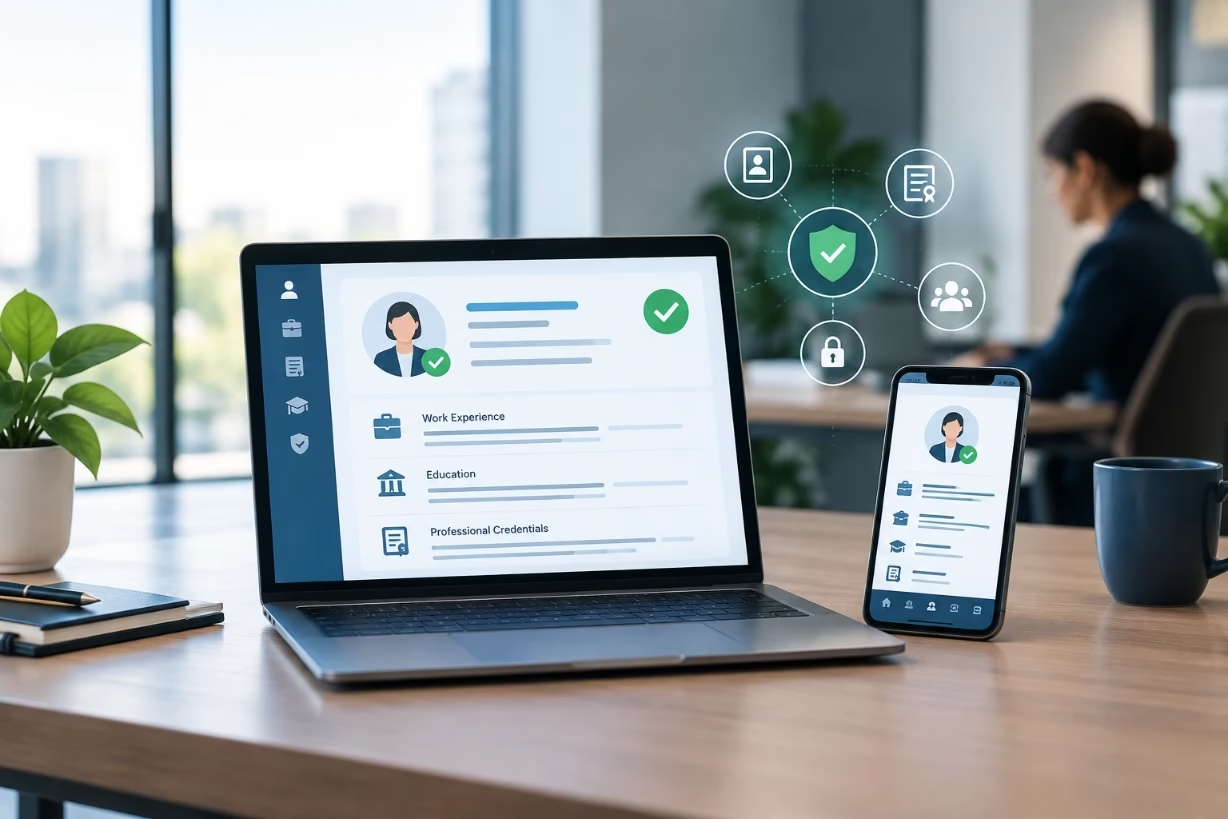
Ethical ways to verify someone’s professional identity online start with consent, basic research, and respect for privacy. I rely on public profiles, official company pages, trusted directories, and direct confirmation from the person, instead of sneaky tools, stalking, or sharing sensitive data without permission.
Why Ethical Verification Of Professional Identity Matters More Than Ever
When I talk about ethical ways to verify someone’s professional identity online, I am really talking about trust. If I get this wrong, I might judge someone unfairly, open myself up to scams, or even put another person at risk. Digital profiles can be polished, fake, outdated, or incomplete, and I need to treat them with a mix of curiosity and caution.
Maybe I am hiring a freelancer I have never met. Maybe someone has reached out with a partnership deal on LinkedIn. Maybe I am checking whether a recruiter, consultant, or investor is who they say they are. In each case, I want to see if their story lines up without crossing lines into spying, harassment, or data abuse.
Ethical ways to verify someone’s professional identity online give me a framework. They help me ask, “What do I truly need to know, and what is none of my business?” That simple question keeps my actions aligned with respect, fairness, and sometimes even legal rules around privacy and data use.
Core Principles Behind Ethical Online Verification
Before I even open a browser tab, I try to ground myself in a few clear principles. These ideas shape every method I use to check whether someone is really the professional they claim to be.
1. Respect Consent Whenever Possible
If I am going to dig deeper into someone’s background, I prefer to tell them. That can be as simple as saying, “I’d like to look up more about your professional history so I can understand your background better.” This sets a transparent tone and reduces the feeling of being secretly investigated.
Of course, I know that I will still look at public information on my own. But keeping consent in mind helps me avoid steps that feel invasive, like trying to access private groups or pushing mutual contacts for gossip instead of facts.
2. Limit Myself To What I Actually Need
I do not need to know everything about a person to confirm their professional identity. If I am working on a small one-time project, I might only need to confirm their skills, portfolio, and a couple of references. If I am hiring for a sensitive role, I may need more, but even then, I should stick to job-related details.
Ethical ways to verify someone’s professional identity online are tied to scope. I ask myself: “Would I be okay if someone did this level of checking on me for the same reason?” If the answer is no, I am going too far.
3. Focus On Public And Voluntarily Shared Information
The safest place to start is what a person has chosen to share or what is already clearly public. That includes LinkedIn, a personal website, a company “About” page, public social media posts, press coverage, and professional portfolios. I avoid trying to dig into private accounts, leaked databases, or information clearly meant to be restricted.
4. Verify Through Multiple Independent Sources
A single profile can be fake. A single glowing review can be planted. Real ethical ways to verify someone’s professional identity online use cross-checking. I might match LinkedIn with a company’s site, then see if the same person appears in conference speaker lists or industry forums. When different sources tell the same story, I can feel more confident.
5. Stay Honest About My Own Bias
It is very easy to misread someone online. Maybe their profile photo looks too perfect and I get suspicious. Maybe we share a school or hometown and I trust them too quickly. Being ethical also means noticing my own quick judgments and slowing down. I look at evidence, not just gut feelings or stereotypes.
Ethical Online Sources To Confirm Professional Identity
Once I am clear about my principles, I move into practice. Ethical ways to verify someone’s professional identity online start with obvious tools, but I use them in a careful, structured way, not just scrolling and guessing.
LinkedIn And Other Professional Profiles
LinkedIn is usually my first stop. I look for signs that the profile is stable and real. For example, a steady work history, specific job titles rather than vague claims, recommendations from people who also look real, and a profile photo that matches across platforms.
I also pay attention to details like:
- Connections from the same company or industry
- Endorsements for skills that align with their claimed work
- Posts or activity that show knowledge of their field
If something looks off, I do not accuse them. I just treat this as a moment to gather more information from other ethical sources.
Official Company Websites And Staff Pages
If someone says they work at a specific company, I usually search for a company staff page, leadership page, or team profile. Not every business lists all employees, but if it is a senior role or a client-facing role, I often expect to see some sign of them.
If I cannot find them, I do not jump to the worst possible conclusion. Smaller companies may not update their sites often. Still, this gap signals that I should politely ask the person for more confirmation, like a work email or a recent document with their name and title.
Professional Directories, Licenses, And Registries
Some fields have official registries. Doctors, lawyers, engineers, and real estate agents often appear in state or national databases. When I am dealing with serious services that affect health, money, or legal status, checking those registries is one of the most ethical ways to verify someone’s professional identity online, because it protects both me and the public.
When I find their name, I look at whether their license is active, whether their location matches what they told me, and whether their specialty lines up with their offers. If I do not find them, but the field normally requires licensing, that pushes me to ask direct, calm questions.
Conference Talks, Articles, And Public Contributions
Real professionals often leave digital footprints through events and content. I search by their full name plus key phrases like “conference,” “webinar,” “panel,” “article,” or “publication.” If I see them speaking at events, writing blog posts, or contributing to industry discussions, it adds credibility.
I also look at whether these sources match the level of expertise they claim. For example, if they call themselves a “senior specialist” but all I find is a couple of beginner blog posts from years ago, I may treat their claims more carefully.
Portfolios, Repositories, And Project Pages
For creative or technical roles, I expect some proof of work. Designers may use Behance or Dribbble. Developers may use GitHub or similar platforms. Writers may have Medium pages or personal blogs. I compare the style, dates, and quality of the work to what they told me in messages or interviews.
Ethical ways to verify someone’s professional identity online in these cases do not stop at just seeing pretty visuals or code lists. I sometimes check how active they are, how many projects seem original, and whether they can explain their work clearly when I ask.
How To Cross-Check Without Crossing Lines
Looking at public information is one thing. How I connect the dots is another. I try to cross-check with care, so my curiosity does not slip into invasion.
Compare Dates, Roles, And Locations
One simple technique is to compare timelines. If their LinkedIn says they worked at a company from 2019 to 2023, I check whether their portfolio projects or public posts from those years line up with that story. If they mention living in New York, but all their recent activity and licensed records show a different country, I may ask clarifying questions.
Minor gaps or overlaps are normal. Life is messy. I look for serious mismatches, like someone claiming two full-time roles in faraway cities at the same time, or degrees from universities that have no record of them.
Ask For Professional Contact Details, Not Personal Secrets
At some point, ethical ways to verify someone’s professional identity online move from quiet research to direct conversation. I might ask them to email me from a company domain, share a link to an official company profile, or provide a reference from a manager or client.
I avoid asking for things that are overly personal or risky, like scans of identity documents, home addresses, or full personal phone records. Those details can create security risks for them and liability for me.
Use References In A Respectful Way
References can be powerful, but they also affect real people. When I contact a reference, I keep my message clear and fair. I ask about the person’s role, reliability, and general performance, and I stay away from gossip or unrelated private questions.
If I need to reach out to a mutual contact on LinkedIn, I usually phrase it gently, something like, “I am considering working with Alex and saw you are connected. Are you comfortable sharing how you know them?” This keeps the tone polite and optional.
Red Flags During Online Verification
Ethical ways to verify someone’s professional identity online also involve recognizing warning signs without turning paranoid. A red flag is a signal to go slower, not always proof of bad intent.
Obvious Signs Something May Be Off
Some patterns I treat as alerts include:
- Profiles with stock photos or faces that appear in many places
- Very new accounts claiming long careers or senior titles
- No trace of them outside one platform, despite bold claims
- Big gaps between what they say and what public records show
- Refusal to use company email or share any verifiable reference
When I see these, I do not attack or accuse. I simply increase my caution, reduce the level of risk I accept, or decide not to move forward.
Emotional Pressure And Urgency
Scammers often use emotional pressure. They might claim they need money fast for a business opportunity, or they push me to sign a contract today without time to check their background. When I feel rushed, I stop and reset my pace. Ethical ways to verify someone’s professional identity online rely on having time to think.
What Not To Do When Verifying Someone Online
There are lines I do not cross, even when I really want certainty. Acting outside those lines can damage trust, break policies, or even violate laws in some places.
Avoid Hacking, Stalking, Or Hidden Surveillance
I do not try to break into private accounts, use spyware, or monitor someone secretly. Not only is this unethical, but it can also be illegal. Ethical ways to verify someone’s professional identity online stay fully within the law and use open, transparent methods.
Do Not Spread Unproven Claims
If I see something suspicious, I keep it to myself until I have real evidence, or I choose to simply walk away from the deal. Posting accusations in public, or sharing rumors with others, can seriously harm a person’s life and can also put me at legal risk.
Do Not Misuse Their Data
Any information I gather should have a clear purpose. Once I no longer need it, I avoid storing it casually in old messages, random files, or shared tools. If I need to keep it, I try to store it securely and limit access. Treating their data with care is part of the ethical ways to verify someone’s professional identity online.
How To Talk Openly About Verification
One of the most respectful steps I can take is to make verification a normal part of the relationship, not a secret test. When both sides expect some level of checking, it feels a lot less personal.
Set Clear Expectations Early
If I am hiring, I can write in the job post that there will be background checks at a certain stage. If I am a freelancer, I can say that I am also open to being verified and that I may do some checks on potential clients to avoid fraud. This two-way approach makes ethical ways to verify someone’s professional identity online feel cooperative, not one-sided.
Use Neutral, Non-Accusing Language
When I ask for proof, I try to keep my wording calm and neutral. For example, I might say, “For my records, could you share a link to your company profile or send an email from your official address?” This sounds very different from, “I do not trust you, prove who you are.”
Be Ready To Share Your Own Details
Trust usually grows both ways. If I expect someone to show proof of their professional identity, I should be prepared to do the same. I might share my LinkedIn, my company website, or examples of past work. Showing my own openness supports the culture of ethical ways to verify someone’s professional identity online.
Balancing Privacy, Safety, And Practical Needs
There will always be tension here. I want enough information to feel safe, but I also want to respect the other person’s privacy and dignity. Different situations call for different levels of verification, and I need to adjust my approach each time.
For a small, low-risk project, a quick LinkedIn check and a short conversation may be enough. For a long-term hire or a sensitive financial role, I may need formal background checks run by trusted services that follow clear privacy rules and laws. In every case, the heart of ethical ways to verify someone’s professional identity online is proportionality and respect.
When I stay human in this process, I remember that behind every profile is a person who can feel judged, doubted, or misunderstood. I try to let my questions come from curiosity and care, not from fear or cynicism.
Practical Step-By-Step Checklist You Can Use
To make this real, I like using a simple checklist. This helps me repeat ethical ways to verify someone’s professional identity online without overthinking every time.
For most situations, I might follow steps like these:
- Search their full name with their job title and city.
- Review LinkedIn or similar profiles for consistency.
- Look for them on the company site or directory.
- Check for professional licenses if relevant to the field.
- Scan for articles, talks, or projects with their name.
- Ask for a company email or verifiable contact method.
- Contact references if the role is serious or long-term.
At each step, I pause and ask myself: “Do I have enough to move forward comfortably?” If I do, I stop. If not, I either continue carefully or decide that the risk is not worth it.
Closing Thoughts: Building A Culture Of Honest Online Identities
When I commit to ethical ways to verify someone’s professional identity online, I am doing more than just protecting myself. I am contributing to a culture where honest people feel safer showing who they are, and where scammers have a harder time hiding behind fake profiles.
This process takes patience. It asks me to question my quick judgments, respect boundaries, and communicate clearly. But in return, I gain relationships built on clarity and mutual trust. The more I practice these habits, the more natural they feel, and the easier it becomes to move through online work and collaboration with both caution and kindness.