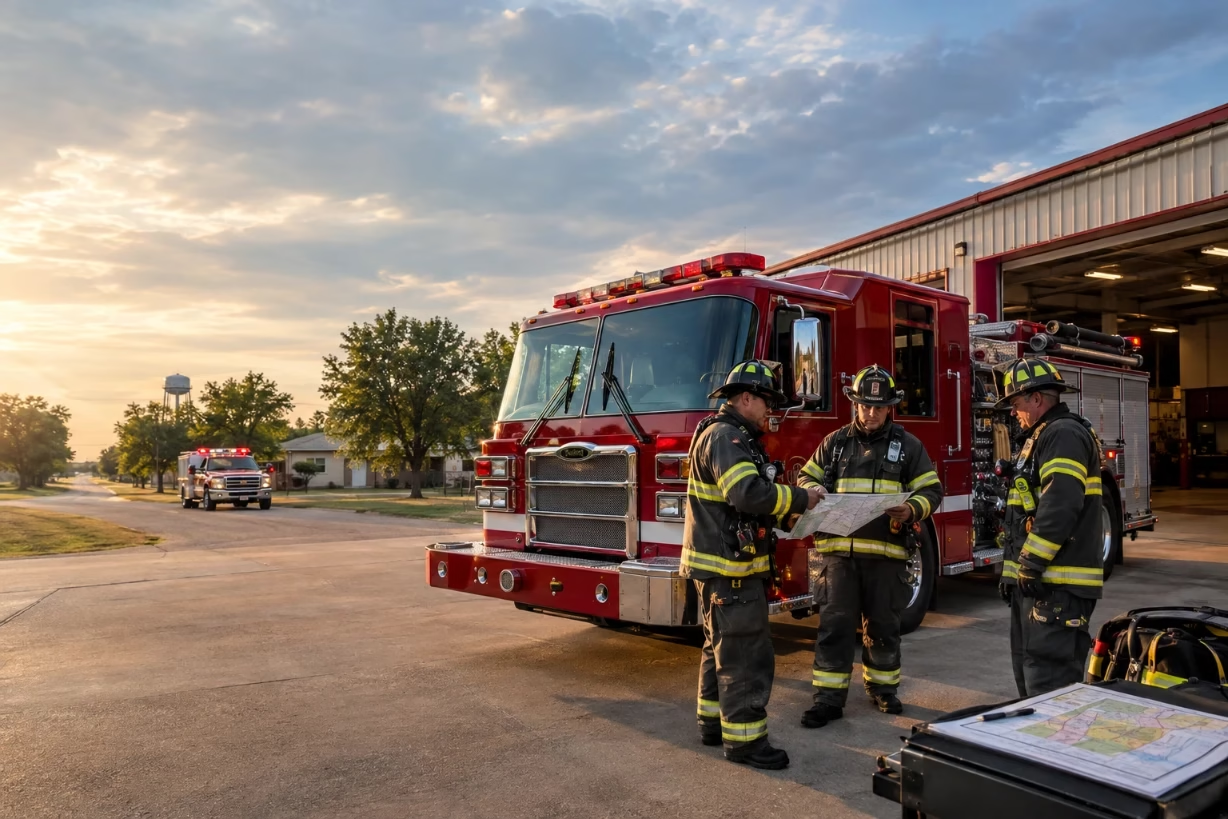
When shady grove fire dept joins from checotah, it pulls a rural volunteer district closer into Checotah’s professional fire and EMS system. That shift usually means faster response times, clearer call boundaries, and stronger mutual aid for both town residents and the surrounding countryside.
Why I Am Writing About Shady Grove And Checotah
I live in the same part of the country where small volunteer stations, rural roads, and long ambulance drives are just part of life. So when I hear about something like shady grove fire dept joins from checotah or a new agreement between departments, I pay attention. Changes in local fire coverage are not abstract policy debates. They decide who shows up when your kitchen is full of smoke, or when your kid gets hurt on a back road.
This article walks through how a move like shady grove fire dept joins from checotah can reshape coverage for everyone in the area. I will keep the language simple, but I will go deep on what actually changes on the ground: response times, staffing, funding, dispatch rules, and daily life for both departments and residents.
Setting The Scene: Shady Grove, Checotah, And Rural Fire Coverage
Before I talk about why coverage changes, I need to paint a quick picture of how fire protection works in rural Oklahoma. Checotah is a small city with its own fire department and closer access to full-time staff, better equipment, and more formal training networks. Shady Grove is a rural community that leans heavily on volunteers and neighbors helping neighbors.
When people online search shady grove fire dept joins from checotah, what they are really asking is whether the smaller Shady Grove area is now tied more closely to Checotah’s department. That might be through a merger, a contract for service, or a tighter mutual aid agreement. No matter the legal form, the practical questions are the same. Who gets the call first? Who owns the trucks? Who pays the bills? And who takes command on big scenes like highway pileups or wildfires?
What It Usually Means When One Fire Dept “Joins From” Another
The phrase shady grove fire dept joins from checotah sounds odd if you think like a lawyer, but in local talk it points to one idea. Shady Grove is stepping into a more formal partnership with Checotah’s fire services. Sometimes that might mean the Shady Grove district contracts Checotah to be its primary responder. Other times it means Shady Grove keeps its own station and volunteers, but daily operations, training, or dispatch now run through Checotah.
From what I have seen in similar towns, changes like this usually fall into one of three buckets:
- A new automatic aid agreement where the closest engine rolls, whether from Shady Grove or Checotah.
- A contract where Checotah officially covers part or all of the Shady Grove area.
- A full or partial merger where Shady Grove’s station, gear, and volunteers become part of a bigger Checotah-led system.
Whatever the legal wording, locals feel it as one thing. When you dial 911 in the Shady Grove area, the system now treats Checotah as part of the normal front-line response instead of a distant backup.
How Local Coverage Changes On The Map
On paper, fire coverage lives on maps and district lines. Those lines decide who gets tax dollars and where each truck is “first due.” When shady grove fire dept joins from checotah, the map usually changes, even if it is only a few roads at first.
Picture a Shady Grove house that sits fifteen minutes from its small volunteer station but only ten minutes from Checotah’s station. In the old setup, Shady Grove might still be the first call out of habit or by old agreements, even if Checotah is closer. After shady grove fire dept joins from checotah in a formal way, dispatch often flips that logic. The closest staffed unit rolls first, and the other department backs them up.
To residents, it can feel like the “border” moved. Maybe their tax bill still lists one district, but the truck on their driveway now carries a different town name. That is the core of how local coverage changes.
Response Times: The Most Noticeable Change For Families
For most families, the only thing that really matters is how fast help arrives. When shady grove fire dept joins from checotah, response time is usually the first and clearest change.
Here is why. Rural volunteer departments like Shady Grove often rely on pagers or phone apps to call volunteers from home or work. It can take several minutes just to round up a crew, get them to the station, and roll a truck. In contrast, a city department like Checotah often has firefighters already at the station, dressed and ready to move.
So if the call is serious, cutting just three or four minutes off the clock can turn a tragedy into a close call. That is the main reason county leaders and chiefs push toward setups where shady grove fire dept joins from checotah style agreements: they want the nearest, readiest help going first, not the one that happens to sit inside a particular old district line.
Staffing And Training: Stronger Together Than Alone
Staffing is another big driver behind shady grove fire dept joins from checotah moves. Volunteer ranks in many rural areas are aging, and younger people are pulled toward jobs far from home. Keeping enough trained volunteers to answer every weekday call can be a struggle.
When a smaller volunteer department gets tighter with a nearby city department, a few good things usually happen:
- Access to more regular training, including live fire drills and EMS refreshers.
- Shared standard operating guidelines, so everyone works the same way on scenes.
- A larger pool of people who can cover daytime calls, when many volunteers are at work.
From the inside, this can feel like a culture shock at first. Volunteers in Shady Grove might be used to doing things “their way,” and now Checotah officers ask them to follow stricter rules, wear matching gear, or complete certain training hours.
But over time, I have seen how those expectations raise the floor for safety. The merger or partnership that starts as shady grove fire dept joins from checotah translates into firefighters who speak the same language on the radio and on the fireground, and that can save both civilian and firefighter lives.
Equipment, Stations, And The Money Question
People also wonder what happens to the Shady Grove station and its trucks when shady grove fire dept joins from checotah. The answer depends on how deep the deal is.
In a straight mutual or automatic aid setup, Shady Grove keeps its own gear and station, but now trains, responds, and plans more closely with Checotah. In a contract for service, Shady Grove might still own some assets but rely on Checotah crews as the primary responders. In a full merger, the Shady Grove station might become a Checotah “Station 2” or “Rural Substation,” still serving the same area but under one big budget and chief.
Funding can actually stabilize when shady grove fire dept joins from checotah. Small rural departments often live on grants, fish fries, and donations. City departments, while not flush with cash, usually have more predictable tax-based income and better access to state and federal grants. Blending the two creates a stronger case for new trucks, better radios, and even small but important items like updated turnout gear or rescue tools.
Dispatch And 911: Cleaner Rules, Less Confusion
Another quiet but powerful change comes in the 911 center. When agreements are loose, dispatchers may hesitate or spend time flipping between old paper maps and outdated lists of who covers what. I have listened to recordings where dispatchers burn precious seconds trying to decide whether to call the small volunteer department or the nearby city.
When shady grove fire dept joins from checotah in a clear, written way, the county 911 center can rewrite its protocols. For calls in certain zones, the computer can tone out Checotah and Shady Grove at the same time, or it can always page whichever station has the closest unit with the right skill set.
The result is less back-and-forth and fewer dropped handoffs. For someone having a heart attack or a rollover crash, you never hear those background arguments. You just see lights coming down the road faster.
Mutual Aid Becomes Real Partnership
It is common to say that all departments help each other. But there is a big difference between casual, handshake help and a fully built mutual or automatic aid system. When shady grove fire dept joins from checotah, the region usually shifts from that first type of help to the second.
Real mutual aid means:
- Written agreements on who covers what types of calls and where.
- Shared radio channels and clear talk groups for big incidents.
- Joint drills so that command, tactics, and safety rules match.
Once that is in place, a structure fire in the Shady Grove area might see two Checotah engines, a Shady Grove tanker, and maybe even a third neighboring department all dispatched automatically within seconds. That is what people mean when they search shady grove fire dept joins from checotah and ask about “coverage.” They want to know whether this kind of deeper, automatic cooperation now exists where they live.
How Residents Experience The Change Day To Day
From a homeowner’s point of view, most days look exactly the same before and after shady grove fire dept joins from checotah. The grass still grows, the kids still catch the school bus, and the fire station down the road still has the same small sign. But there are subtle shifts you might notice if you pay attention.
You might see different trucks rolling through your area during training or pre-planning visits. You might see joint fundraisers, where both Shady Grove volunteers and Checotah firefighters flip burgers side by side. Local news might mention “Checotah and Shady Grove units responded together” more often. Insurance agents might quietly update your ISO rating or risk category based on better coverage.
And sadly, on bad days, you might see a stronger wall of red and white lights at a crash scene than you would have seen a few years earlier. That added help is the real-world face of shady grove fire dept joins from checotah.
Concerns And Fears: Losing Identity Or Local Control
Not everyone cheers when two departments get closer. I have heard volunteers worry that shady grove fire dept joins from checotah means their homegrown department will be swallowed or sidelined. People fear losing that sense of “our” station, built and paid for by neighbors over decades.
Those feelings are real, and any chief or city leader who ignores them will have a rough time. The best partnerships, in my view, respect Shady Grove’s local pride while still pushing toward better, shared coverage. That can look like keeping the Shady Grove station name, keeping a local advisory board, or making sure local volunteers still have chances to lead on smaller calls in their area.
Good leaders talk honestly about what is changing and what is not. They explain why shady grove fire dept joins from checotah style changes are about shaving minutes off life-or-death calls, not about disrespecting decades of volunteer service.
Benefits For Checotah And The Wider Region
It is easy to focus only on what Shady Grove gains, but Checotah and neighboring districts benefit as well. When shady grove fire dept joins from checotah, Checotah often gains a rural substation, extra water supply through Shady Grove tankers, and a wider pool of trained people for large-scale events like wildfires and highway hazmat incidents.
Regional planning also gets easier. Instead of ten tiny departments all planning separately, a combined or closely linked Checotah–Shady Grove area can approach the county with one voice. That tends to attract more grant money for big-ticket items like wildland engines, rescue boats, or upgraded radio systems.
So while the search phrase shady grove fire dept joins from checotah sounds like a one-way street, the truth on the ground is more balanced. Each side brings strengths the other side needs.
What Homeowners Should Do After Coverage Changes
If you live in or near Shady Grove and you have heard that shady grove fire dept joins from checotah in some way, there are a few simple steps you can take to protect your family and understand your new coverage.
- Call your local fire station and ask if your address is in their first-due area.
- Update your insurance agent with any new fire department or ISO details.
- Invite both Shady Grove and Checotah crews to walk through large barns, shops, or businesses so they know layouts.
- Learn which department handles EMS first response at your home.
None of this takes long, but it helps you make the most of the stronger coverage that shady grove fire dept joins from checotah is meant to provide.
How To Support Your Local Departments During The Transition
Changes in coverage can stretch both paid staff and volunteers. Training schedules get tighter, paperwork grows, and new policies roll out. If you want this shift to succeed, you can do more than just watch from your porch.
Here are a few practical ways to help while shady grove fire dept joins from checotah and settles into a new normal:
- Show up at town or county meetings and speak in favor of strong, stable fire funding.
- Volunteer for support roles, even if you do not want to enter burning buildings.
- Stay patient when you see joint training or road closures; practice makes safer responses.
- Say thank you. A kind word in a grocery store parking lot still matters.
These human touches might not show up on a coverage map, but they help keep morale high while departments work out the kinks of shady grove fire dept joins from checotah style agreements.
Looking Ahead: What This Change Means For The Next Generation
When I step back and look long term, I see moves like shady grove fire dept joins from checotah as part of a bigger shift in rural public safety. Small, proud volunteer departments are finding that the best way to keep serving their neighbors is to link arms with nearby city departments, share training, and accept help where it makes sense.
For kids growing up in Shady Grove and Checotah, the patch on the uniform might change a bit over the years, but the promise stays the same. When someone dials 911, trained people will show up with the right gear, working as one team, not as rival districts. That is the heart of why local coverage changes, and it is why I believe careful partnerships between places like Shady Grove and Checotah are worth the effort and the hard conversations.
In simple terms, shady grove fire dept joins from checotah means a move toward more reliable, faster, and more coordinated help for everyone in that corner of Oklahoma. And when you are the one standing in the yard watching smoke pour out of your home, that is the only metric that really counts.