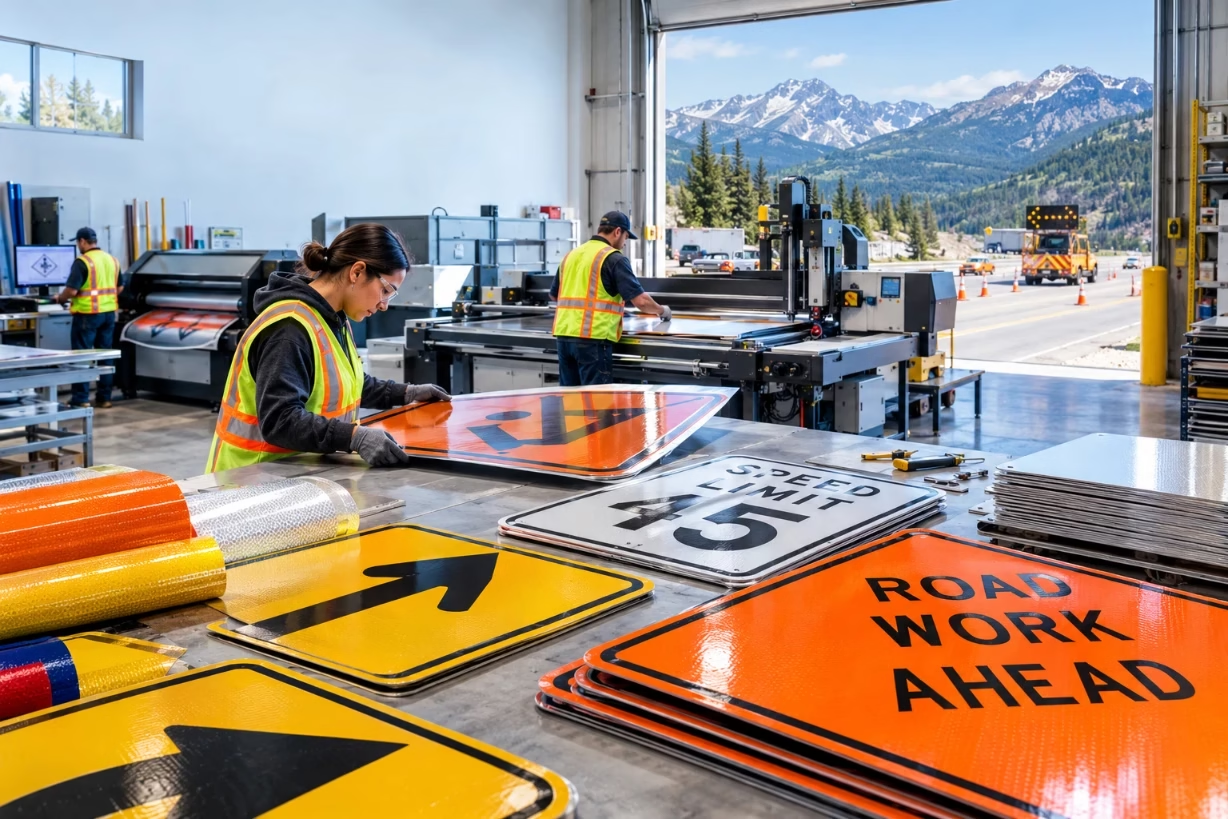
Emergency spending Colorado roadway signage manufacturing usually kicks in when a road hazard or legal deadline cannot wait for the normal budget cycle, so transportation officials tap special funds, fast track approvals, and send rush orders to sign manufacturers to get compliant signs on the road quickly.
Why Emergency Spending For Roadway Signage Even Exists
When I first looked into emergency spending Colorado roadway signage manufacturing, what stood out to me was how reactive the process can feel. Roads change fast. A rockslide wipes out a lane in the mountains, a wildfire closes a highway, or a new safety rule takes effect with a hard deadline. Drivers still expect clear, accurate signs no matter what is going on behind the scenes.
Under normal conditions, planning, design, and purchasing for signs move through long, quiet steps. With emergency spending, those steps are squeezed into days or even hours. The whole point is to protect life and keep traffic moving while staying inside state and federal rules. Colorado agencies cannot just throw up any sign they want. They still have to follow the Manual on Uniform Traffic Control Devices, state standards, and public money rules, even when they are in a rush.
So, emergency spending Colorado roadway signage manufacturing acts like a relief valve. When standard budgets and timelines are too slow to deal with a sudden risk, transportation officials lean on special funding and fast track purchasing tools to get warning, detour, and regulation signs made and installed without waiting for the next big budget meeting.
Who Is Involved When Colorado Uses Emergency Sign Spending
Emergency spending Colorado roadway signage manufacturing usually involves more players than most people realize. I will walk through the main ones, because knowing who holds which lever makes the whole process easier to understand.
State Transportation Officials
The Colorado Department of Transportation, often shortened to CDOT in daily talk, usually takes the lead. Their traffic engineers and maintenance supervisors are the people finding problems, closing lanes, and calling for new signs. They also check that any new sign messages match federal and state standards.
Local Governments
Counties and cities handle a huge share of roads in Colorado. When a flash flood washes out a county bridge or a big sinkhole opens on a city street, local public works managers may be the ones asking for emergency spending Colorado roadway signage manufacturing. Sometimes they draw from their own emergency funds, and sometimes they work with CDOT and federal partners.
Sign Manufacturers And Fabricators
Sign shops are the quiet backbone in this story. Some are private businesses that bid on contracts. Some are prison industries or public shops that handle state work. They are the ones who can say yes or no when an engineer calls late in the day and asks, “Can you get 40 detour signs out by tomorrow morning?”
Emergency Management And Law Enforcement
During big incidents, emergency managers and police or highway patrol join the decisions. They may ask for extra changeable message signs near an evacuation zone, or new speed limit signs to slow traffic in a burn scar area. Their feedback guides how emergency spending Colorado roadway signage manufacturing is used on the ground.
When Does Sign Work Qualify As An “Emergency”
Not every rush request is true emergency spending Colorado roadway signage manufacturing. Agencies follow triggers that justify skipping long bidding steps and tapping special funds. These triggers usually fall into a few buckets.
Immediate Threats To Life Or Safety
Think of a rockslide blocking a mountain pass, leaving only one narrow lane open. Without the right signs and cones in place, drivers could hit workers or each other. In that kind of case, no one wants to wait weeks for a normal contract. The need for signs is urgent and direct.
Sudden Damage To Key Infrastructure
Floods, wildfires, severe snow storms, and crashes that damage bridges can all create instant signing gaps. Warning signs, detour arrows, and lane closure panels may need to appear overnight so people can still reach jobs, schools, and hospitals with minimal chaos on the road.
Legal Or Regulatory Deadlines
Sometimes an emergency is on paper more than in the sky. A new rule might require updated speed limits in a high crash area or new signs for bike lanes by a specific date. If the normal schedule slips and the deadline is now close, agencies may treat that as an emergency to avoid breaking state or federal law.
How Funding Flows In An Emergency Sign Project
Money is the heart of emergency spending Colorado roadway signage manufacturing. Public agencies have to use tax dollars with care, but they also cannot leave drivers at risk while forms sit in a stack. The way money flows in these cases usually follows a predictable pattern.
Reprogramming Existing Budgets
First, officials often look at current budgets. If a planned sign upgrade project can wait a few months, money from that line might be moved into an emergency lane closure or detour project. This kind of swap keeps spending roughly level over the year while handling the critical need up front.
Using Dedicated Emergency Funds
Many agencies keep small emergency funds for fast action. When they trigger emergency spending Colorado roadway signage manufacturing, they may draw from these accounts to cover quick orders and overtime. Later, they may backfill the emergency fund from larger highway or safety budgets.
Seeking Statewide Or Federal Disaster Aid
For severe storms or big wildfires, Colorado may qualify for state disaster funds or federal help from sources like emergency relief for highways. In those cases, the state or local agency might pay sign costs up front, then seek partial repayment later. Clear records of sign orders, delivery dates, and installation labor matter a lot for that repayment.
The Fast Track Purchasing Process For Signs
Once money is set aside, emergency spending Colorado roadway signage manufacturing turns into a race between time, safety rules, and vendor capacity. Purchasing teams have special tools they can use during real emergencies.
Emergency Procurement Exceptions
Public contracting usually requires open, competitive bidding. During an emergency, agencies can often bypass some steps if waiting would risk harm. That might mean calling an already approved vendor directly or using a short list of prequalified sign manufacturers who have agreed to fixed prices.
Term Contracts And Price Lists
To make things smoother, many agencies sign longer term contracts in advance. Those contracts include price lists for standard signs, posts, and hardware. When emergency spending Colorado roadway signage manufacturing is needed, the buyer can simply pull items off that list and place an order without starting a new negotiation from scratch.
Small Purchase Thresholds
There are also rules that allow small urgent buys below a set dollar amount. A maintenance supervisor might be able to buy a limited number of emergency signs on a purchase card or quick order system, as long as the cost stays under that ceiling. This is common for simple, short term warning signs.
From Hazard To Installed Sign: Step By Step
It helps to picture how emergency spending Colorado roadway signage manufacturing plays out on a real timeline. I like to break it into a short set of steps that start right when a hazard is found.
1. Hazard Or Requirement Identified
First comes the trigger. Maybe a crew on patrol spots a washed out shoulder along a rural highway. Maybe crash data shows a sudden spike in a work zone. Or maybe a new rule orders updated school zone signs with very short notice.
2. Field Assessment And Quick Plan
A traffic engineer or supervisor visits, measures lanes, checks sight distances, and notes what signs already exist. They sketch out where new signs need to go, what messages they should carry, and how long they are likely to stay in place.
3. Fast Design And Message Approval
Design in emergency spending Colorado roadway signage manufacturing focuses on speed while staying inside standards. Staff pull standard sign codes from manuals, pick sizes and reflectivity that match road speed, and write simple, legal messages. Senior staff or a licensed engineer gives quick approval, often the same day.
4. Purchasing And Vendor Contact
Once the sign list is ready, purchasing staff place orders with one or more sign manufacturers. If it is truly urgent, they may call vendors ahead of sending the official paperwork. The goal is to lock in production time as soon as possible.
5. Manufacturing And Quality Checks
On the shop floor, emergency spending Colorado roadway signage manufacturing often means reshuffling the schedule. Workers may pause non urgent jobs to print or fabricate emergency panels. They cut blanks, apply reflective sheeting, add legends, and run quality checks to be sure colors, fonts, and sizes match the order.
6. Delivery And Field Installation
Crews pick up or receive shipments from the sign shop. Then they head to the site with posts, brackets, and tools. For high risk spots, temporary signs on portable stands may go up first, followed by permanent installs once the situation settles down.
7. Documentation And Cost Tracking
Behind the scenes, someone logs each step. They note sign quantities, unit prices, labor hours, and dates. That record proves that emergency spending Colorado roadway signage manufacturing was justified and that public money was used only on what the incident required.
How Manufacturers Handle Emergency Colorado Road Sign Orders
On the manufacturing side, emergency orders can feel like a sprint. I picture a sign plant that has a normal rhythm of weekly batches. Suddenly the phone rings: a rush order for dozens of “ROAD CLOSED” and detour signs tied to a storm or fire.
Capacity And Scheduling
Most sign shops keep a little room in their schedule for rush work. When emergency spending Colorado roadway signage manufacturing appears, they may run overtime shifts, reassign staff from custom projects, or group similar signs into efficient production batches.
Materials And Inventory
Emergency sign work is easier when the shop keeps a healthy stock of aluminum blanks, reflective sheeting, and standard colors. Many vendors keep extra of the most common sizes and colors used on Colorado highways so they can react quickly.
Quality Control Under Time Pressure
Rushing can never mean sloppy work. Drivers trust that a sign is accurate the moment they see it. So shops still check letter spacing, color contrast, retroreflectivity, and mounting hole patterns, even when they are racing a storm clock.
Common Types Of Signs Bought With Emergency Spending
Emergency spending Colorado roadway signage manufacturing tends to focus on a few families of signs that show up over and over in crisis or fast changing situations.
Temporary Warning And Detour Signs
Think bright orange work zone and warning signs. “DETOUR,” “ROAD CLOSED,” “ONE LANE ROAD AHEAD,” and arrow boards all guide drivers around damage or work. Many of these are mounted on portable stands or trailers so they can move as conditions change.
Speed Limit And Advisory Speed Signs
After a wildfire or flood, road surfaces can be rough or unstable. Agencies may lower speed limits suddenly to keep people safe. Emergency spending Colorado roadway signage manufacturing can cover new regulation speed signs or yellow advisory speed plaques posted near curves and steep grades.
Incident And Evacuation Signs
During big wildfires or chemical spills, special signs may mark evacuation routes, roadblocks, and check points. These might be simple text panels or more custom message boards placed along key highways.
Balancing Speed, Rules, And Spending Control
There is always a tension in emergency spending Colorado roadway signage manufacturing. Go too slow, and drivers face unmarked hazards. Move too fast without checks, and an agency can slide into waste or legal trouble. The art lies in finding a middle path.
Maintaining Transparency
Even in a hurry, officials document their decisions. They log when the hazard was found, why they used emergency procedures, which vendor they called, and how they chose sign types. Later on, those notes explain to the public, auditors, or lawmakers why the money was spent the way it was.
Reviewing After The Crisis
Once temporary signs come down and roads return to normal, many agencies hold a quiet review. They ask questions like: Did we order too many signs or too few? Did the vendor deliver on time? Can we improve our term contracts so next time emergency spending Colorado roadway signage manufacturing is even smoother?
Building Standard Playbooks
Over time, those reviews turn into playbooks. A playbook might list standard sign packages for landslides, for bridge failures, or for work zone crashes. With that shelf of ready made plans, agencies do not have to invent an answer from scratch while the clock is ticking.
How Communities Benefit From Well Managed Emergency Sign Spending
At the end of the day, emergency spending Colorado roadway signage manufacturing is not really about metal and reflective film. It is about people trying to get home safely when the normal road network falls apart.
When the system works well, drivers see clear, consistent messages from the first warning miles away from a hazard to the final “END DETOUR” sign. Emergency routes are marked. Work areas are shielded. Confusing hand written signs from private parties are replaced by official panels that match what people expect in Colorado.
That kind of order helps more than traffic flow. It also calms nerves. If you have ever driven through smoke or heavy rain and suddenly found yourself facing a “ROAD CLOSED AHEAD” sign with no clear alternative, you know how stressful that can feel. Good emergency spending Colorado roadway signage manufacturing reduces those uncertain moments by giving drivers a clear script to follow, even on a bad day.
How Agencies And Vendors Can Prepare Ahead Of Time
While the word emergency makes this all sound reactive, smart planning can soften the blow. I see a few practical habits that help Colorado agencies and manufacturers stay ready.
Pre Approved Standard Sign Lists
Having a shared list of common emergency signs, all pre checked for size and wording, makes life easier. When a storm hits, engineers can just pick from the list instead of debating each message from scratch.
Regular Vendor Coordination
Calls and meetings between traffic officials and sign vendors during quiet months pay off later. Vendors can share how much rush capacity they realistically have and what they need from the agency to start work quickly.
Training For Field Staff
Maintenance and traffic crews who understand emergency spending Colorado roadway signage manufacturing can spot gaps and suggest practical fixes. Training that walks them through simple layout rules, sign spacing, and how to report new needs helps tie the whole system together.
When I pull all these threads together, emergency spending Colorado roadway signage manufacturing looks less like a mystery and more like a series of fast but thoughtful choices. Each choice aims to protect people on the road, respect public money, and still meet the very real pressure of time that comes with storms, fires, and sudden change.