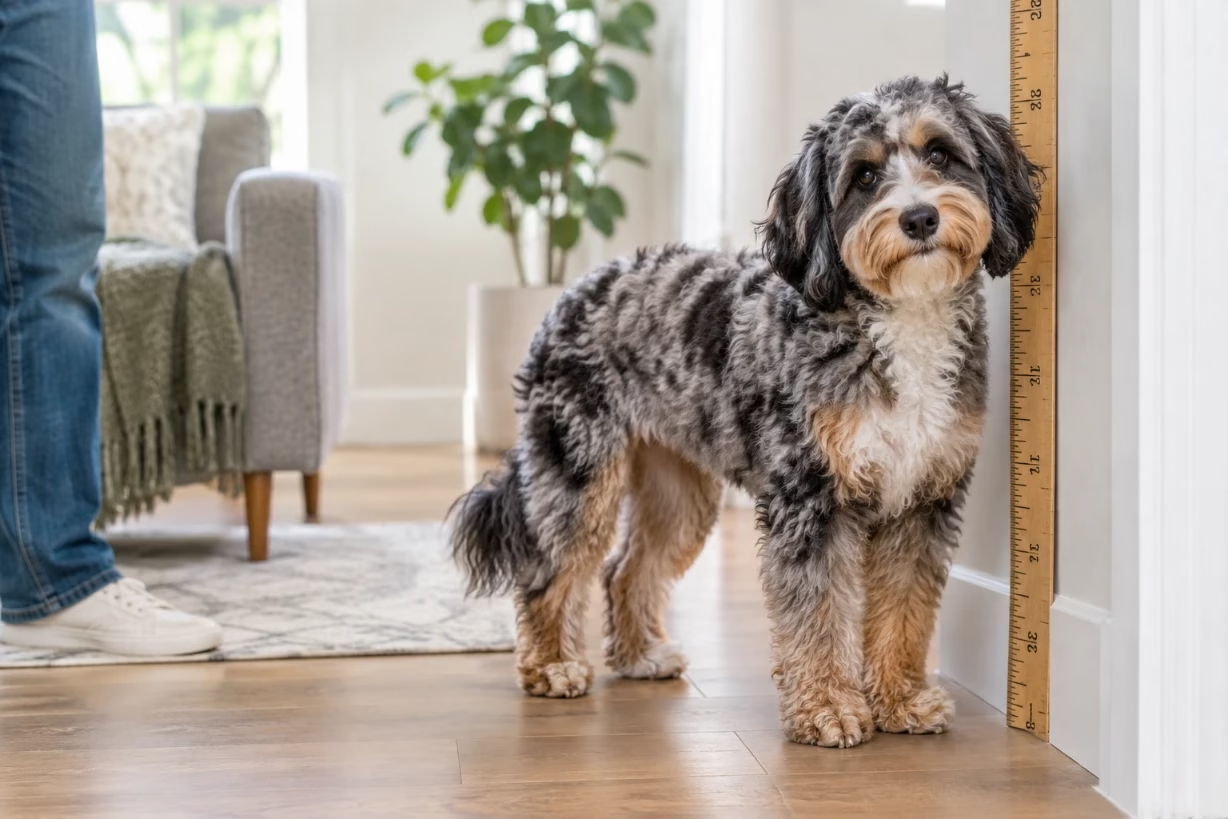
Most mini Aussiedoodle full grown adults reach about 15 to 30 pounds in weight and 12 to 17 inches in height at the shoulder. The exact size depends on genetics, the size of the Mini Australian Shepherd and Mini Poodle parents, and overall health and nutrition.
What Does A Mini Aussiedoodle Full Grown Actually Look Like?
When people ask how big does a mini Aussiedoodle full grown get, they usually want a clear mental picture, not a vague range. So let me paint that picture for you. A mini Aussiedoodle full grown dog usually has a compact, athletic body, with a slightly longer torso, a deep chest, and strong, medium-length legs. They look sturdy but not bulky, more like a small athlete than a fragile toy dog.
Most mini Aussiedoodles full grown stand roughly at your knee if you are an average height adult. When you lean down to pet one, your hand naturally falls on a soft, wavy or curly coat that feels lighter than a heavy double coat but thicker than a flat single coat. Their heads are a nice blend of the alert, fox-like look of the Australian Shepherd and the expressive eyes and muzzle of the Poodle.
Because this is a hybrid breed, there is no one single size, even for a mini Aussiedoodle full grown. Some lean more toward the mini Poodle parent and stay on the lighter side. Others pull more from the Mini Australian Shepherd side and end up a bit taller and more solid. Still, they clearly sit in the small to medium dog category, not a toy and not a big dog.
Typical Height And Weight Of A Mini Aussiedoodle Full Grown
If you want numbers, here is the simple answer I use when someone asks me about mini Aussiedoodle full grown size. This is the typical range I see:
For height, a mini Aussiedoodle full grown usually reaches somewhere between 12 and 17 inches measured at the shoulder. For weight, most adults fall between 15 and 30 pounds. Many land right in the middle, around 18 to 25 pounds, which feels just right for a dog you can pick up when needed but who still feels sturdy on walks and hikes.
If a mini Aussiedoodle ends up shorter than 12 inches and under about 15 pounds, people sometimes call that dog a toy Aussiedoodle instead of mini. On the other end, if a dog passes 17 inches and pushes above 30 pounds, it starts to look more like a small standard Aussiedoodle size. Those labels are not official, but they help set expectations when you look at a mini Aussiedoodle full grown chart from a breeder.
Why Mini Aussiedoodle Full Grown Size Can Vary So Much
One thing I want you to keep in mind: hybrids are not as predictable as purebred dogs. A mini Aussiedoodle comes from Miniature Australian Shepherds (or sometimes small standard Aussies) and Miniature Poodles. Each parent line can carry genes for slightly different sizes. When those genes mix, the puppies can fall anywhere along that spectrum.
In one litter, you might see a mini Aussiedoodle full grown sibling hit 30 pounds and stand tall and lean, while another from the same litter tops out at 16 pounds with a shorter, rounder frame. That does not mean anything is wrong. It is just how genetics work when you cross two different breeds.
Breeders sometimes try to narrow this range by breeding similar sized parents generation after generation. The more consistent the parents are in height and weight, the more predictable a mini Aussiedoodle full grown size becomes. But even then, there is always a bit of surprise. So when you fall in love with a puppy, you are signing up for a range, not an exact number.
Mini Aussiedoodle Growth Stages From Puppy To Adult
If you are planning for space, budget, and lifestyle, it helps to know how a mini Aussiedoodle full grown body develops over time. Here is the general pattern I see most often.
Birth To 8 Weeks: Tiny But Growing Fast
Mini Aussiedoodle puppies are very small at birth, often just a few ounces. Over the first two months, they gain quickly. By 8 weeks, many weigh between 3 and 6 pounds. Their legs still look a bit short, their bodies are chunky, and their paws sometimes look oversized compared to the rest of them. You will not be able to tell the final mini Aussiedoodle full grown height at this stage, but you may see which pups are trending larger or smaller within the litter.
3 To 6 Months: Major Growth Spurt
Between 3 and 6 months, expect your mini Aussiedoodle to go through a real growth spurt. Many pups reach 60 to 75 percent of their mini Aussiedoodle full grown size by about 6 months. Their legs lengthen, they start to look more like teenagers than round puppies, and they gain muscle as they play. It is common for them to seem a little lanky or awkward during this stage. Clothes, collars, and harnesses may need frequent adjustments as the dog grows almost week to week.
6 To 12 Months: Slower, Steady Growth
From 6 to 12 months, the pace of growth slows down but does not stop. Most mini Aussiedoodles hit their full height by about 10 to 12 months. Weight continues to rise more gradually. A mini Aussiedoodle full grown weight often settles during this period, though some will keep filling out a little into the second year. You may notice the chest deepen and the muscles firm up as activity levels remain high.
12 To 18 Months: Filling Out And Maturing
By one year, your dog will look like a mini Aussiedoodle full grown to most people, but there is usually still a subtle change in body shape as they fully mature. Some dogs add a pound or two of muscle, and the coat often thickens or changes texture. Mentally, they also start to act more like adults, even if they keep that playful Aussiedoodle energy for life.
Factors That Influence Mini Aussiedoodle Full Grown Size
Even with a typical range, your individual dog’s final size depends on more than just the label “mini.” These are the biggest factors that influence how large your mini Aussiedoodle full grown dog might become.
Genetics From Both Parents
Genetics carry the most weight in size. A mini Aussiedoodle whose parents are on the small side of the mini spectrum is more likely to stay small. If either parent is closer to a small standard Aussie or a Moyen Poodle, there is a good chance your dog will end up on the higher end of the mini Aussiedoodle full grown range.
If you are getting a puppy, ask the breeder for the adult height and weight of both parents and grandparents if they know it. While it is never a promise, this gives you the best clue about where your own dog might land. Puppies that look noticeably bigger or smaller than the rest of the litter may trend in that direction as adults.
Generation Type: F1, F1b, And Beyond
People often talk about generation when they talk about doodle breeds. You might see terms like F1, F1b, or multigen. These labels simply show how many generations of mixing have happened between Aussies and Poodles.
An F1 mini Aussiedoodle is a direct cross between a pure Mini Australian Shepherd and a pure Miniature Poodle. An F1b is usually an F1 Aussiedoodle bred back to a Poodle again. Multigen means several generations of Aussiedoodles have been bred together. Size can become more consistent in later generations if the breeder selects parents with very similar mini Aussiedoodle full grown sizes over time.
Nutrition And Diet Quality
Food does not change the genes, but it can affect how those genes express. A puppy who receives balanced, high quality nutrition will grow in a healthy pattern and reach its natural mini Aussiedoodle full grown weight without being underdeveloped or overweight. Overfeeding or frequent high calorie treats will not make a dog taller, but it can lead to excess fat, which puts strain on joints and may cause future health problems.
On the flip side, underfeeding or low quality food can stunt growth if it happens over a long period, especially during the first year. I always suggest talking with your vet about the right feeding schedule and calorie count for a growing mini Aussiedoodle full grown puppy so they develop at a steady, safe pace.
Exercise And Activity Level
Exercise shapes the body more than it changes size, but it still matters. A mini Aussiedoodle with regular walks, playtime, and mental games will build lean muscle and maintain a healthy weight. That kind of lifestyle helps the dog settle into a strong and balanced mini Aussiedoodle full grown shape.
A dog that rarely moves may accumulate extra pounds even if its height is within the common range. Extra weight can make a mini Aussiedoodle look much bigger than it should, and can lead to knee, hip, or back strain. Since both Aussies and Poodles are active, you can expect your mini Aussiedoodle full grown friend to do best with a daily outlet for energy.
Spay Or Neuter Timing
Spaying or neutering can have a small effect on growth plates in the bones. Dogs fixed very early sometimes grow a bit taller and leaner because their growth plates close later. Dogs fixed slightly later may end up a little shorter and stockier. The difference is usually modest, but if you are very focused on mini Aussiedoodle full grown size, it is something you can discuss with your vet when planning surgery timing.
How To Estimate Future Size Of A Mini Aussiedoodle Puppy
If you already have a puppy, you probably want to know how big this mini Aussiedoodle full grown dog will end up. There is no perfect formula, but you can use a few tricks to get a rough estimate that is often pretty close.
Look At The Parents And Older Siblings
Parents still provide the best starting point. If both parents are around 20 pounds and 14 inches tall, chances are good your mini Aussiedoodle full grown pup will land close to that range. If one parent is 15 pounds and the other is 30 pounds, expect your dog somewhere in the middle, like 20 to 25 pounds, though outliers do happen.
If the breeder has grown puppies from previous litters with the same parent pair, ask for those sizes too. That real life mini Aussiedoodle full grown data is very useful when setting your expectations for your own puppy.
Use The “Double At Four Months” Rule
A simple guideline many dog owners use is this: for small to medium mix breeds like a mini Aussiedoodle, whatever the puppy weighs at 4 months old, you can roughly double it to guess adult weight. For example, a 4 month old mini Aussiedoodle that weighs about 10 pounds may reach around 20 pounds as a mini Aussiedoodle full grown adult.
This rule is not perfect, and some dogs grow faster or slower at different stages. Still, it gives you a working number so you know what size crate to buy or how big a harness you may need later.
Check The Growth Curve Over Time
Weigh your puppy every few weeks and keep a little log or chart. Watch how quickly the number climbs. A steep rise early on that slowly flattens out is normal. When those weights start to level off for a month or two in the second half of the first year, you are approaching the mini aussiedoodle full grown final weight. Height usually stops increasing a little before that point.
Is A Mini Aussiedoodle Full Grown Size Right For Your Lifestyle?
Size is not just about numbers on a scale. It also shapes daily life with your dog. Here is how a typical mini Aussiedoodle full grown size fits into common living situations.
Living Space: Apartment, Townhouse, Or House
A mini Aussiedoodle full grown is small enough to live comfortably in an apartment or condo as long as you provide daily walks and mental stimulation. They do not need a huge yard, but they do appreciate chances to run and explore. In a house with a fenced yard, they thrive, because you can easily mix in training, fetch, and off leash zoomies in a safe area.
Family Size And Children
Many families like this size because a mini Aussiedoodle full grown is sturdy enough to play with respectful kids without being too fragile, but still small enough for older adults or younger teens to handle on a leash. They can snuggle on the couch and also join you for hikes without being too big to lift into the car.
Travel And Lifestyle
If you travel often, a mini Aussiedoodle full grown size makes life easier. You can lift them into carriers or car seats, and some airlines allow dogs under a certain weight limit in the cabin. Always check rules, of course, but being under about 25 pounds can open more options. In cars, they fit well in crates or seat belt harness systems without taking over the entire back seat.
Healthy Weight And Body Condition For A Mini Aussiedoodle Full Grown
Once your dog reaches adulthood, your focus shifts from growth to maintenance. Keeping a mini Aussiedoodle full grown at a healthy weight matters more than hitting a specific number on the scale.
How To Tell If Your Dog Is At A Good Weight
Instead of only watching the scale, learn to check body condition by touch and sight. Stand over your dog and look down. You should see a gentle waist tuck behind the ribs. Run your hands along the sides. You should be able to feel the ribs with light pressure without them poking out sharply.
If you cannot feel ribs at all, your mini Aussiedoodle full grown is probably carrying extra weight. If ribs and spine stand out clearly, your dog may be too thin. Your vet can help you confirm and set a target weight that fits your specific dog’s frame.
Feeding An Adult Mini Aussiedoodle
An adult mini Aussiedoodle full grown usually eats between 1 and 2 cups of quality dry food per day, split into one or two meals. The exact amount depends on calorie density of the food, activity level, age, and whether your dog is spayed or neutered. Always check the bag’s guide as a starting point, then adjust based on your dog’s body condition over time.
Treats should stay under about 10 percent of daily calories. It is easy to overdo snacks, especially with a dog that looks at you with those Aussiedoodle eyes. Using part of the regular meal as training rewards helps keep your mini Aussiedoodle full grown at a steady, healthy size without sneaky extra calories.
Common Myths About Mini Aussiedoodle Full Grown Size
Before wrapping up, I want to clear up a few myths that float around when people talk about mini Aussiedoodle full grown dimensions.
Myth 1: All Minis Stay Under 20 Pounds
“Mini” is a loose label, not a strict rule. Plenty of healthy mini Aussiedoodles full grown hit 22, 25, or even close to 30 pounds, especially if one parent pushes the upper limit of the mini range. That does not mean you got the wrong dog. It just reflects the natural variety in mixed breeds.
Myth 2: You Can Pick Exact Size From A Chart
Size prediction charts can be helpful, but they are only estimates. No chart, app, or quick formula can promise the exact mini Aussiedoodle full grown weight your dog will reach. Think of those tools as ballpark guides, not contracts.
Myth 3: More Food Makes A Dog Taller
Overfeeding a puppy does not push it to a larger frame. It only increases the risk of joint problems and obesity later on. Genetics already set the basic mini Aussiedoodle full grown structure. Your job is to support that structure with balanced food, not to push size beyond what the bones were built to handle.
Key Takeaways About Mini Aussiedoodle Full Grown Size
A mini Aussiedoodle full grown usually stands 12 to 17 inches at the shoulder and weighs about 15 to 30 pounds. That puts them in a very portable, family friendly size range, ideal for apartments, houses, and active lifestyles. Genetics, parent size, nutrition, and activity all shape where your dog lands within that range.
If you are already sharing your life with one, watch your dog grow through the first year with curiosity rather than stress. If you are still deciding whether this mix is right for you, picture a dog big enough to hike mountains, small enough to share your couch, and bright enough to keep you on your toes. That is the heart of a mini Aussiedoodle full grown companion.